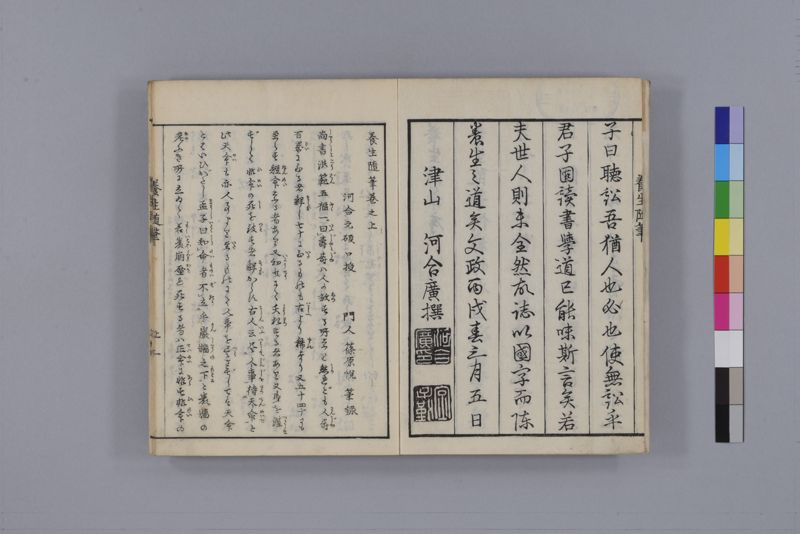
翻刻
【右頁】
子曰聴訟吾猶人也必也使無訟乎
君子固読書学道已能味斯言矣若
夫世人則未全然故誌以国字而陳
養生之道矣文政丙戌春三月五日
湯山 河合廣撰【落款二つ】
【左頁】
養生随筆巻之上
河合元碩口授 門人 篠原悦 筆録
尚書洪範(しやうしよこうばん)五 福(ふく)一に曰(いふ)_レ寿(じゆと)寿(じゆ)は人の欲(ほつ)する所なり然(しか)れども人寿(にんじゆ)
百 歳(さい)に至る者 鮮(すくな)し七十に至(いた)るものも古(いにしへ)より稀(まれ)なり又五十四十にも
至らす短命(たんめい)なる者あり又 幼少(いようせう)にて夭札(ようさつ)【ママ】する者あり又身を謹(つゝしま)
ずして非命(ひめい)の死(し)を致(いた)す者 鮮(すくな)からす古人(こしん)云(いふ)尽(つくして)_二 人(じん)‐事(じを)_一待(まつ)_二 天(てん)‐命(めいを)_一と
此天 命(めい)も亦人事より至(いた)るものにて人事を尽(つく)さずしては天命
とはいひがたし孟子(まうし)曰(いわく)知(しる)_レ命(めい)者(ものは)不(ず)_レ立(たゝ)_二乎 巌牆(かんしやう)之(の)下(もとに)_一と巌牆の
危(あや)ふき所に立ゐて若(もし)巌(いはほ)崩(くづれ)壓(おさ)れ死する者は正命(せいめい)に非(あら)す非命(ひめい)の
現代語訳
【右頁】
孔子が言った。「訴訟を聞くことは私も他の人と同じようにできるが、理想は訴訟そのものが起こらないようにすることだ。」君子であれば当然読書し学問を積んで、この言葉の意味を理解できているだろう。しかし一般の人々にはまだ完全に理解されていないので、ひらがなで記して養生の道を述べることにした。文政9年(1826年)春3月5日
湯山 河合廣 撰
【左頁】
養生随筆 巻之上
河合元碩口授 門人 篠原悦 筆録
『尚書』洪範篇に「五福の第一は寿である」とある。寿命は人が望むものである。しかし人が百歳に至ることは稀で、七十歳に至る者も古来まれである。また五十歳、四十歳にも達せずに短命で終わる者もあり、また幼少で早世する者もある。また身を慎まずして非業の死を遂げる者も少なくない。古人が言うように「人事を尽くして天命を待つ」というが、この天命もまた人事によってもたらされるもので、人事を尽くさなければ天命とは言い難い。孟子が言うには「命を知る者は険しい崖の下には立たない」と。崖の危険な所に立って、もし岩が崩れて圧死する者は正命(天寿を全うした死)ではなく非命(非業の死)である。
英語訳
【Right Page】
Confucius said: "In hearing litigation, I am no different from others, but what is essential is to bring it about that there are no litigations." A gentleman who has studied books and learned the Way can surely appreciate these words. However, since common people do not yet fully understand, I have recorded this in Japanese script to explain the way of health preservation. Spring, third month, fifth day of Bunsei 9 (1826)
Yugama, Kawai Hiroshi, composed
【Left Page】
Yogyo Zuihitsu (Essays on Health Preservation), Volume 1
Orally transmitted by Kawai Genseki Recorded by disciple Shinohara Etsu
The "Hongfan" chapter of the Book of Documents states that "the first of the five blessings is longevity." Longevity is what people desire. However, it is rare for people to reach one hundred years, and even those who reach seventy have been rare since ancient times. There are also those who die young without reaching fifty or forty, and those who die in childhood. Moreover, there are many who do not exercise self-discipline and meet unnatural deaths. As the ancients said, "Do your utmost as a human being and await the mandate of Heaven." However, this heavenly mandate also comes through human effort, and without exhausting human effort, one can hardly speak of heavenly mandate. Mencius said, "Those who understand fate do not stand beneath a precipitous wall." Those who stand in dangerous places under cliffs and die crushed when rocks fall do not die a natural death (seimei) but an unnatural death (himei).