翻刻
【右頁】
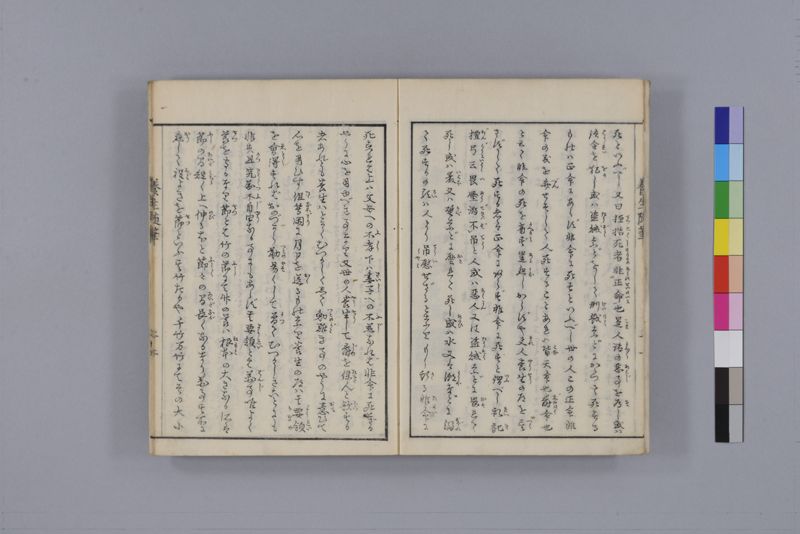
死といふべし又曰 桎梏(てつこく)死者(しするもの)非(あらす)_二正命(せいめいに)_一也 是(これ)人 諸(もろ〳〵)の悪事(あくじ)を為(な)し或は
法令(はうれい)を犯(をか)し或は盗賊(たうぞく)などをして刑戮(けいりく)などにかゝつて死する
ものは正命にあらず非命に死すといふべし世の人この正命非
命の義を弁(べん)せすして人死することあれは皆(みな)天命也 寿命(じゆめう)也
と云て非命の死を省(かへりみ)ず豈(あに)悲(かな)しからずや夫(それ)人 養生(やうせう)の道を尽(つく)
さずして死する者は正命にあらず非命に死すと謂(いふ)べし礼記(れいき)
檀弓(だんぐうに)云(いはく)畏(い)壓溺(あうできは)不(ず)_レ吊(てう)と人或は悪人(あくにん)又は盗賊(たうそく)などに畏(おそ)れて
死し或は巌(いはほ)又は壁(かべ)などに壓(おさ)れて死し或は水又は潮(うしほ)などに溺(おぼれ)
て死するの類(るい)は人より《振り仮名:吊慰|てうい|くやみ》せざるとなりもしし斯(かゝ)る非命(ひめい)に
【左頁】
死すれは上は父母への不孝(ふこう)下は妻子(さいし)への不慈(ふじ)なれば非命に死せざる
やうに心を用ゆべき事なり又世の人 養生(やうせう)して寿(じゆ)を保(たもた)んと欲(ほつ)する
者あれとも養生はとかくむつかしくして勉難(つとめがた)き事のやうに意(おも)ひて
心を用ひす但(たゝ)等閑(なほざり)に月日を送(おく)るものなり養生の道は其 《振り仮名:要領|ようれい|かなめ》
を会得(ゑとく)すればおのづから勤易(つとめやす)くして曽(かつ)てむつかしきことにも
非す且(かつ)究屈(きうくつ)不自由(ふじゆう)なる事もあらず其 要領(ようれい)とは万事(ばんじ)唯よく
節(せつ)を守るなり節(せつ)とは竹の節(ふし)にて竹の節は根本(ねもと)の大きなる所は
節(ふし)の間(あいだ)短(みぢか)く上へ伸(のび)るほと節々(ふし〳〵)の間(あいだ)長(なが)くなるなり万事其所に
応(おう)して程(ほど)よき節(せつ)といふ其竹たるや千竹万竹にてその大小
現代語訳
【右頁】
死というべきである。また孟子は「桎梅(手枷足枷)によって死ぬ者は正命ではない」と言った。これは人がさまざまな悪事を行い、あるいは法令を犯し、あるいは盗賊などの行為をして刑罰などにかかって死ぬ者は正命ではなく非命に死すというべきだということである。世の人はこの正命と非命の意味を理解せずに、人が死ぬことがあればすべて天命だ、寿命だと言って、非命の死を省みない。なんと悲しいことではないか。そもそも人が養生の道を尽くさずして死ぬ者は正命ではなく非命に死すと言うべきである。『礼記』檀弓篇に「畏・圧・溺は弔わず」とある。人がある時は悪人や盗賊などに恐れられて死に、ある時は岩や壁などに押しつぶされて死に、ある時は水や潮などに溺れて死ぬような類いは、人から弔慰されないということである。もしこのような非命に
【左頁】
死すれば、上は父母への不孝、下は妻子への不慈となるので、非命に死なないように心を用いるべきことである。また世の人で養生して寿命を保とうと欲する者もいるけれども、養生はどうも難しくて実行しがたいことのように思って心を用いず、ただなおざりに月日を送るものである。養生の道はその要領を会得すれば自然と実行しやすくなって、全く難しいことでもなく、また窮屈で不自由なこともない。その要領とは万事ただよく節を守ることである。節とは竹の節のことで、竹の節は根本の太い所は節の間が短く、上へ伸びるほど節々の間が長くなるものである。万事その所に応じて程よい節というものがある。その竹というものは千本万本あってもその大小は
英語訳
【Right page】
should be called death. Mencius also said: "Those who die in shackles do not die a natural death." This means that people who commit various evil deeds, or violate laws and regulations, or engage in banditry and die under criminal punishment should be said to die not a natural death but an unnatural one. People in the world do not understand the meaning of natural death versus unnatural death, and whenever someone dies, they say it is all heavenly mandate or natural lifespan, paying no attention to unnatural deaths. How sad this is! Indeed, those who die without exhausting the way of health preservation should be said to die not a natural death but an unnatural one. The "Tan Gong" chapter of the Book of Rites says: "Those who die from fear, crushing, or drowning are not mourned." This means that when people sometimes die from being terrorized by villains or bandits, sometimes die from being crushed by rocks or walls, or sometimes die from drowning in water or tides, such cases do not receive condolences from others. If one dies such an unnatural death,
【Left page】
it constitutes unfilial behavior toward one's parents above and lack of compassion toward one's wife and children below, so one should be mindful not to die an unnatural death. There are people in the world who wish to preserve their lives through health cultivation, but they think that health preservation is somehow difficult and hard to practice, so they do not apply themselves to it and merely pass their days carelessly. If one grasps the essential points of the way of health preservation, it naturally becomes easy to practice—it is not at all difficult, nor is it restrictive or inconvenient. The essential point is simply to maintain proper moderation in all things. "Moderation" refers to the joints of bamboo: in bamboo joints, the intervals between joints are short at the thick base, and as the bamboo grows upward, the intervals between joints become longer. In all things, there is appropriate moderation according to the situation. As for bamboo, whether there are thousands or tens of thousands of stalks, their size varies,