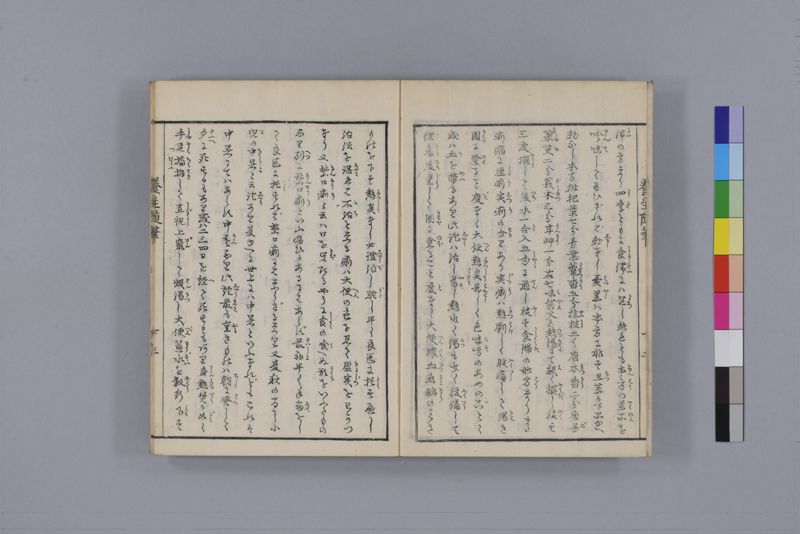
翻刻
【右丁】
滞の方なり四季(しき)ともに食滞(しよくたい)には宜(よろ)し然れども本方(ほんはう)の薬品(やくひん)を
吟味(きんみ)して用ひざれば効(しるし)なし売薬(はいやく)は本方に非す且(かつ)薬か下品ゆへ
効なし本方枇杷葉七分青葉 藿香(くわつかう)五分 桂枝(けいし)五分唐 木香(もつかう)二分唐呉(ご)
茱萸(しゆゆ)二分 莪木(がしゆつ)三分甘草一分右七 味(み)袋(ふくろ)に入れ熱湯(ねつたう)にて能(よ)く擺(ふるだ)し服(ふく)す
三度 擺(ふりた)して後(のち)水一 合(かう)入五 勺(しやく)に煎(せん)し服(ふく)す食滯(しよくた)の妙 方(はう)なりまた
痢病に虚痢(こより)実痢(しつり)の分(わか)りあり実痢(しつり)は熱(ねつ)劇(はけ)しく腹痛(ふくつう)して渇(かは)き
圊(かはや)に登(のほ)ること度(ど)なく大 便(へん)熱(ねつ)臭(しう|くさみ)甚(はなはた)しく色 味噌(みそ)のあめのごとく
或は血(ち)を帯(おへ)るあり此 證(しやう)は治し易(やす)し熱少く渇(かつ)も少く腹痛(ふくつう)して
裡急後重(りきうこうじう)して圊(かはや)に登(のほ)ること度(と)なく大 便(へん)膿血(のうけつ)魚脳(きよなう)のことき
【左丁】
ものを下す熱臭(ねつしう)なし此 證治(しやうぢ)し難(がた)し早く良医に托(たく)すへし
治法を誤(あやま)れは不治(ふち)となる痢は大 便(へん)の色を見て虚実(きよじつ)をわかつ
なり又 禁口痢(きんかうり)と云は口を閉(とぢ)たるやうに食(しよく)の食(く)へぬ形(かたち)をいふたもの
なり別(へつ)に禁口痢(きんかうり)といふ病ひかあるにはあらず最初(さいしよ)早く手 当(あて)をし
て良医に託(たく)すれば禁口痢にはならざるなり又夏秋の間に小
児(に)の中暑(ちうしよ)と云 證(しやう)あり夏ゆへに世上には中暑といふなれどもこれは
中暑にてはあらす中 寒(かん)なり此 證(しやう)最(もつと)も重(おも)(おも)きものは朝(あした)に発(はつ)して
夕(ゆふへ)に死するもあり或は二三日を経(へ)て死するもあり身熱(しんねつ)焚(やく)か如(ごと)く
手足搐搦(しゆそくちくてき|つひふ)して直視(しぎし)上 竄(ざん)して煩渇(はんかつ)し大 便(べん)黄水(わうずい)を数行(すかう)下(くた)す
現代語訳
【右丁】
滞の薬方である。四季を通じて食滞には良い。しかし本方の薬品を吟味して用いなければ効果がない。売薬は本方ではなく、かつ薬が下品であるため効果がない。本方は枇杷葉七分、青葉藿香五分、桂枝五分、唐木香二分、唐呉茱萸二分、莪朮三分、甘草一分。右七味を袋に入れ熱湯でよく振り出して服用する。三度振り出した後、水一合を入れ五勺に煎じて服用する。食滞の妙方である。また
痢病には虚痢と実痢の区別がある。実痢は熱が激しく腹痛して渇き、便所に行くこと頻繁で、大便の熱臭が甚だしく、色は味噌飴のようで、あるいは血を帯びることもある。この症状は治しやすい。熱少なく渇きも少なく腹痛して裏急後重があり、便所に行くこと頻繁で、大便は膿血で魚の脳のような
【左丁】
ものを下す。熱臭はない。この症状は治し難い。早く良医に託すべきである。治法を誤れば不治となる。痢病は大便の色を見て虚実を分けるのである。また禁口痢というのは口を閉じたように食べ物が食べられない状態を言ったものである。別に禁口痢という病があるわけではない。最初に早く手当てをして良医に託せば禁口痢にはならない。また夏秋の間に小児の中暑という症状がある。夏であるため世間では中暑というが、これは中暑ではなく中寒である。この症状で最も重いものは朝に発症して夕方に死ぬこともあり、あるいは二三日を経て死ぬこともある。身熱は燃えるようで手足は痙攣し、直視上竄して煩渇し、大便は黄水を何度も下す。
英語訳
[Right page]
stagnation remedy. It is good for food stagnation throughout the four seasons. However, without carefully selecting and using the proper medicinal ingredients, it is ineffective. Patent medicines are not the authentic formula, and moreover, since the drugs are of inferior quality, they are ineffective. The authentic formula consists of: loquat leaf 7 parts, fresh agastache leaf 5 parts, cinnamon twig 5 parts, Chinese costus root 2 parts, Chinese evodia 2 parts, zedoary 3 parts, licorice 1 part. Put these seven ingredients in a bag and steep well in hot water before taking. After steeping three times, add one gō of water and decoct down to five shaku, then take. This is a wonderful formula for food stagnation. Also,
dysentery has distinctions between deficient-type and excess-type dysentery. Excess-type dysentery has severe heat with abdominal pain and thirst, frequent trips to the toilet, extremely foul-smelling hot stools that are colored like miso syrup, and sometimes contain blood. These symptoms are easy to treat. With little heat and little thirst but abdominal pain with tenesmus, frequent toilet visits, and stools containing pus and blood like fish brain
[Left page]
matter are passed. There is no hot smell. These symptoms are difficult to treat. One should quickly entrust care to a good physician. If treatment methods are mistaken, it becomes incurable. In dysentery, one distinguishes between deficient and excess types by observing the color of the stools. Also, what is called "closed-mouth dysentery" refers to a condition where one cannot eat as if the mouth were closed. There is no separate disease called closed-mouth dysentery. If proper treatment is given early and entrusted to a good physician, it will not become closed-mouth dysentery. Also, during summer and autumn, there is a condition in children called "summer heat stroke." Because it occurs in summer, people commonly call it heat stroke, but this is not heat stroke but rather "cold stroke." The most severe cases of this condition can develop in the morning and result in death by evening, or death after two or three days. Body heat burns like fire, hands and feet convulse, there is upward staring and irritable thirst, and yellow watery stools are passed multiple times.