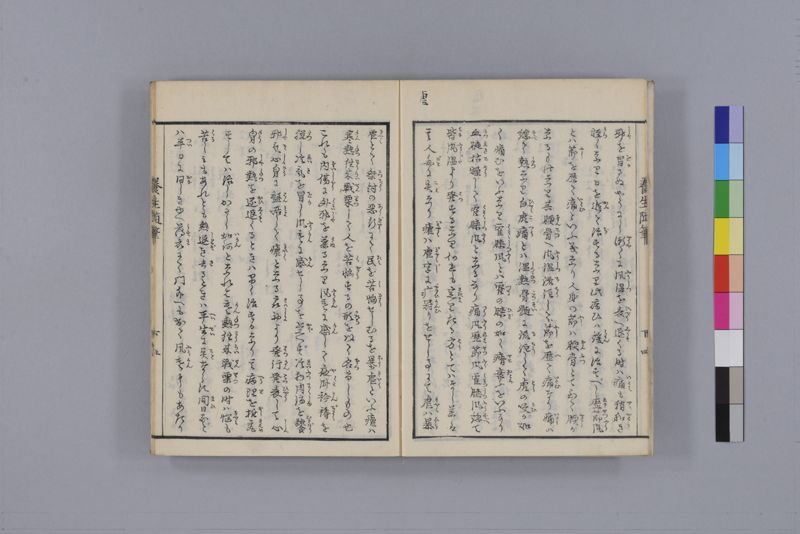
翻刻
【右丁】
邪を冒(をか)さぬやうにし漸(やうや)くに風湿(ふうしつ)を表(ひやう)へ退(しりそ)くる時は痛(いたみ)も稍(やゝ)和(やはら)き
軽(かろ)くなり日を追(おふ)て治(ぢ)するなり此病ひは緩(くわん)に治すべし歴節風(れきせつふう)
とは節(ふし)を歴て痛(いたむ)といふ義なり人身の節(ふし)は膜骨(なんこつ)【腝ヵ】とて至て膜(やはら)か
なるものなり其 膜骨(なんこつ)へ風湿(ふうしつ)流注(るちう)して節(ふし)を歴(へ)て痛(いたむ)なり痛(いたみ)は
総(すべ)て熱(ねつ)なり白虎痛(ひやくこつう)とは湿熱(しつねつ)骨髄(こつずい)に流注(るちう)して虎(とら)の咬(かむ)が如
く痛むをいふなり霍膝風(くわくしつふう)とは霍(つる)の膝(ひざ)の如く痩(やせ)衰(おとろ)ふをいふなり
血腋(けつゑき)枯燥(こそう)して霍膝風(くわくしつふう)となるなり痛風(つうふう)歴節風(れきせつふう)霍膝風(くわくしつふう)総(すべ)て
皆(みな)風湿(ふうじや)より発(はつ)するなり何れも定(さたま)りたる方(はう)とてはなし薬は
其人 毎(ごと)に異(こと)なり瘧(ぎやく)は虐(ぎやく)字(じ)に疒(やまひ)冠(かんひ)りをせし事にて虐(きやく)は暴(ほう)
【九行目頭部欄外】
虐
【左丁】
虐(きやく)とて桀紂(けつちう)の悪行(あうぎやう)にて民(たみ)を苦悩(くなう)せしむるを暴虐(ほうきやく)といふ瘧は
寒熱(かんねつ)往来(わうらい)戦栗(せんりつ)して人を苦悩(くなう)するの形(かたち)を以て名(なつ)けしもの也
これも内傷(ないしやう)に外邪(くわいじや)を兼(かぬ)るなり風寒(ふうかん)に感(かん)して夜臥(やくわ)衿褥(きんぢよく)を
脱(たつ)し冷気(れいき)を冒(をか)し風寒(ふうかん)に感(かん)せし事を覚(おほ)へず冷物(れいふつ)肉渇(にくしゆ)【酒ヵ】を饕(むさぼり)
邪気(しやき)心兇(しんけう)【胷ヵ】に盤居(はんきよ)して瘧(きやく)となる最初(さいしよ)より発汗(はつかん)発表(はつひやう)して心(しん)
兇(けう)の邪熱(しやねつ)を遂(おひ)退(しりそ)くるときは早く治するなり其 病理(へうり)を推(おし)究(きはめ)
すしては治しかたく如何(いかん)となれは)寒熱(かんねつ)往来(わうらい)戦栗(せんりつ)の時は悩(なやみ)も
苦(くち)しみもあれとも)熱 退(しりぞ)き去(さ)るときは平生(へいぜい)に異な(こと)ならす間(まひ)にちなど
は平日に同(おな)しきゆへ薄衣(うすき)にて門外へも出て風寒(ふうかん)にもあたり
現代語訳
【右丁】
外邪を侵さないようにし、だんだんに風湿を体表へ退散させる時は痛みも次第に和らぎ軽くなり、日を追って治癒する。この病気は緩やかに治すべきである。歴節風とは関節を経て痛むという意味である。人体の関節は軟骨といって非常に柔らかなものである。その軟骨へ風湿が流れ込んで関節を経て痛むのである。痛みはすべて熱である。白虎痛とは湿熱が骨髄に流れ込んで虎が噛むように痛むことを言う。鶴膝風とは鶴の膝のように痩せ衰えることを言う。血液が枯燥して鶴膝風となるのである。痛風・歴節風・鶴膝風はすべて風湿から発するものである。いずれも決まった処方はない。薬はその人ごとに異なる。瘧は虐の字に病垂れを付けたもので、虐は暴虐の
【左丁】
暴虐といって桀王や紂王の悪行で民を苦悩させることを暴虐という。瘧は寒熱が往来し戦慄して人を苦悩させる形から名付けたものである。これも内傷に外邪を兼ねたものである。風寒に感じて夜寝る時に衿や褥を脱ぎ、冷気を侵し、風寒に感じたことを覚えず、冷たい物や肉、酒を貪り、邪気が胸中に居座って瘧となる。最初から発汗・発表して胸中の邪熱を追い退散させる時は早く治癒する。その病理を推し究めなければ治しにくい。なぜかというと、寒熱往来し戦慄する時は悩みも苦しみもあるが、熱が退き去る時は平生と変わらず、間欠期などは平日と同じなので、薄着で門外へも出て風寒にも当たり
英語訳
[Right page]
One should avoid invasion by external pathogenic factors, and when wind-dampness is gradually expelled to the body surface, the pain also gradually becomes gentler and lighter, healing day by day. This disease should be treated slowly. "Wandering joint wind" means pain that travels through the joints. The joints of the human body are made of cartilage, which is extremely soft. When wind-dampness flows into this cartilage, it causes pain that travels through the joints. All pain is essentially heat. "White tiger pain" refers to damp-heat flowing into the bone marrow, causing pain like a tiger's bite. "Crane's knee wind" refers to wasting and weakening like a crane's knees. Blood and fluids become dry and depleted, resulting in crane's knee wind. Gout, wandering joint wind, and crane's knee wind all arise from wind-dampness. None of these have fixed prescriptions. Medicine differs for each person. "Malaria" (gyaku) is formed by adding the disease radical to the character for "tyranny," where tyranny means
[Left page]
Tyranny refers to the evil deeds of King Jie and King Zhou who caused suffering to the people, called "violent tyranny." Malaria is named after the form of alternating chills and fever with shivering that causes suffering to people. This also combines internal damage with external pathogenic factors. Being affected by wind-cold, removing collar and bedding while sleeping at night, being invaded by cold qi, not remembering being affected by wind-cold, indulging in cold foods, meat, and alcohol, pathogenic qi settles in the chest and becomes malaria. When sweating and surface release are applied from the beginning to expel the pathogenic heat from the chest, it heals quickly. Without thoroughly investigating the pathophysiology, it is difficult to cure. Why is this? During episodes of alternating chills and fever with shivering, there is distress and suffering, but when the fever retreats, the patient is no different from usual, and during intermittent periods they are the same as on normal days, so they go outside the gate in light clothing and expose themselves to wind and cold