翻刻
【右丁】
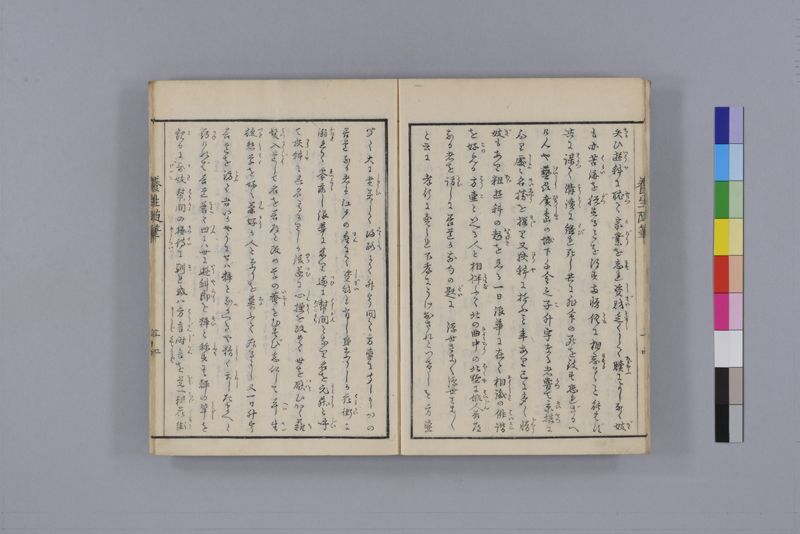
矢(ちか)ひ遊(いう)斜(や)に耽(ふけつ)て家業(かげう)を忘(わす)れ資材(しざい)乏(ともし)くして贖(あがなふ)によしなく妓(ぎ)
も亦 苦海(くかい)を脱(だつ)することを得す両情 倶(とも)に相 忘(わする)るゝこと能はず
共に謀(はかつ)て溝瀆(こうとく)に縊(くび)れ死し共に非命の死を致す恐れざるへ
けんや芸州(けいしう)広島(ひろしま)の城下千金之 子(こ)升宇なる者 嘗(かつ)て京摂(けいせつ)に
至り処(しよ)々 名勝(めいしやう)を探(さぐ)り又 狭斜(けうや)に遊ふこと年あり已に多く情(じやう)
妓(ぎ)もあり粗(ほゞ)遊斜の趣(おもむき)を見る一日浪華に在て相識(そうしき)の俳諧(はいかい)
を好(この)める方壺(はうこ)といへる人と相 伴(ともな)ふて北の曲中(きよくちう)の北野(ほくや)に俳人(はいじん)善道
なる者を訪(とひ)しに善道か前句の題(だい)に 浮世さま〳〵浮世さま〳〵
と云に 孝行に売られ不孝にうけ出されとつけしを方壺
【左丁】
聞て大に賞美(しやうひ)して帰路(かへりみち)にて升宇問て方壺に聞しにかの
善道なる者は江戸の産(さん)にて資材(しざい)も有し身なりしか花街(くわかい)に
溺(おほれ)れて零落(れいらく)し浪華に来り遂(つひ)に《振り仮名:幇間|はうかん|たいこもち》となり名を元蔵(もとさう)と呼(よび)
て狭斜(けうしや)に其名高なりしか後(のち)遂(つひ)に心操(しんそう)を改めて世を厭(いと)ひかく薙(ち)
髪(はつ)入道(にうどう)して名を善道と改め草の菴(いほり)をむすび念仏して平生(へいせい)
徒然草(つれ〳〵くさ)を好み兼好(けんかう)か人となりを慕(した)ふて居るよし又一日升宇
善道を訪(とふ)て吾いかやうにせば粋となるへきや精(くわし)く示(しめ)したまへと
尋([た]つね)ければ善道 答(こたへ)て曰(いふ)には世に遊斜郎(いうやらう)を粋(すい)と称(しやう)す其粋の輩(ともがら)を
観(み)るに《振り仮名:哥妓|かき|げいこ》幇間(はうかんの)の《振り仮名:接待|せつたい|あしらい》に馴(な)れ或は《振り仮名:方言|はうげん|さとことば》《振り仮名:時言|じけん|はやりことば》を覚(おほ)へ粗(ほゞ)花街(くるは)
現代語訳
【右丁】
誓いを立て、遊郭に耽溺して家業を忘れ、資金も乏しくなって遊女を身請けする余裕もなく、遊女もまた苦界から脱することができない。両者の情愛はともに相手を忘れることができず、共に謀って溝や堀で首を吊って死に、ともに非業の死を遂げることを恐れないのである。
広島藩の城下に升宇という富裕な家の子息がいた。かつて京都・摂津地方に出かけ、各地の名所を巡り、また遊郭で遊ぶこと数年間に及んだ。すでに多くの馴染みの遊女もおり、おおよそ遊郭の事情を理解していた。ある日、大阪にいて知り合いの俳諧を好む方壺という人と連れ立って、北新地の北野にいる俳人善道という者を訪ねた。善道の前句の題が「浮世さま々々浮世さま々々」というのに対して、「孝行に売られ不孝に請け出され」と付けたのを方壺が
【左丁】
聞いて大いに賞賛し、帰り道で升宇が方壺に尋ねたところ、あの善道という者は江戸の出身で財産もある身分だったが、花街に溺れて零落し、大阪に来て遂に太鼓持ちとなり、元蔵と名乗って遊郭でその名が知られていた。しかし後に遂に心を改めて世を厭い、このように剃髪して入道となり、名を善道と改め、草庵を結んで念仏し、平素は徒然草を愛読し、兼好法師の人となりを慕って暮らしているということであった。
また別の日、升宇が善道を訪ねて「私はどのようにすれば粋になれるでしょうか。詳しく教えてください」と尋ねたところ、善道は答えて言うには「世間では遊郭通いの男を粋と呼ぶ。その粋と言われる連中を見ると、芸妓や太鼓持ちのもてなしに慣れ、あるいは遊郭言葉や流行語を覚え、おおよそ遊郭の
英語訳
【Right page】
They make vows and become addicted to the pleasure quarters, forgetting their family business. Their finances become depleted, leaving them unable to ransom courtesans, while the courtesans themselves cannot escape their world of suffering. The mutual affection between both parties makes it impossible for them to forget each other, and together they conspire to hang themselves in ditches and moats, unafraid of meeting unnatural deaths together.
In the castle town of Hiroshima domain, there was a wealthy merchant's son named Masuu. He once traveled to the Kyoto-Settsu region, toured famous sites in various places, and spent years frequenting pleasure quarters. He already had many familiar courtesans and generally understood the ways of the pleasure quarters. One day, while in Osaka, he accompanied an acquaintance named Hōko who enjoyed haikai poetry to visit a haiku poet named Zendō in Kitano of the northern quarter. When Zendō presented the opening verse "This floating world, this varied floating world," someone added "Sold through filial piety, redeemed through unfilial conduct," which Hōko
【Left page】
heard and greatly praised. On the way back, when Masuu inquired of Hōko about this, he learned that this Zendō was originally from Edo and had been a man of means, but became addicted to the flower districts and fell into ruin. He came to Osaka and eventually became a taikō-mochi (professional entertainer), calling himself Motozō and becoming well-known in the pleasure quarters. However, he later reformed his heart, became weary of the world, shaved his head to become a Buddhist monk, changed his name to Zendō, built a grass hermitage, chanted Buddhist prayers, and spent his days reading the Tsurezuregusa, admiring the character of Kenkō.
On another day, Masuu visited Zendō and asked, "How can I become truly sophisticated? Please teach me in detail." Zendō replied, "Society calls men who frequent pleasure quarters 'sophisticated.' Observing these so-called sophisticated fellows, they become accustomed to the service of geishas and entertainers, learn the specialized language and fashionable expressions of the quarters, and generally understand the ways of the pleasure districts.