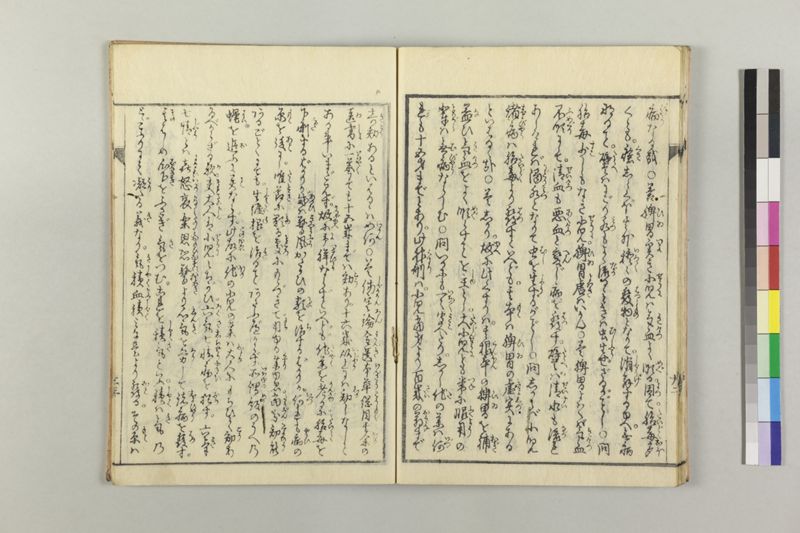
翻刻
病(びやう)なる哉○答 脾胃(ひゐ)実(つよ)き小児(せうに)は気血(きけつ)よく順(めぐ)る。因(よつ)て。胎毒(たいどく)多(おほ)
くとも。瘡(くさ)しらくぼ其外/種々(いろ〳〵)の発物(はつしもの)となりて。消解(しやうげ)するゆへ。無病
なること。譬(たとへ)はにごり水(みつ)もよく流(なが)るゝときは虫生(むししやう)ぜざるがごとし○問
胎毒 少(すこ)しもなき小児(せうに)。脾胃(ひゐ)虚(よはき)はいかん○答 脾胃よはくば気血(きけつ)
不順(ふめぐり)にして。清血(せいけつ)も悪血(あくけつ)と変(へん)じ病を発(はつ)す。譬(たとへ)ば清水(せいすい)も流(なが)れ
あらければ濁水(にごりみづ)となりて虫(むし)を生(しやう)ずるがごとし○問 しからば小児
諸病(しよびやう)は胎毒(たいどく)より発(はつ)すといへども。其/本(もと)は脾胃(ひゐ)の虚実(きよじつ)【濁点の付間違い】にある
といはるゝ哉○答 しかり。故(ゆへ)に此くすりは。其/根本(こんほん)の脾胃(ひゐ)を補(おぎ)
益(な)ひ気血(きけつ)をよく順(めぐ)らすことを主(しゆ)とし。大小児(たいじんせうに)【「人」脱ヵ】とも常(つね)に服用(ふくよう)の
輩(ともがら)は無病(むびやう)ならしむ○問 いかにも一々(いち〳〵)聞(きこ)へたり。しかし他(た)の薬は何(いづ)
れも十五才までとあり。此/神剤(くすり)は。小児当才より百/歳(さい)の翁(おきな)まで
奇効(きこう)あるといはるゝは如何(いかん)○答 傷寒論(しやうかんろん)金匱(きんき)本草綱目(ほんさうこうもく)其/余(ほか)の
医書(ゐしよ)に一薬(いちやく)にても十五歳までは効(こう)あり。十六歳/以上(いじやう)には効(しる)しなしと
ある事いまだ見ず。故(かるがゆへ)に《割書:予(よ)》/詳(つまびらか)ならずといへども。他薬(たやく)を考(かんがゆ)るに。胎毒(たいどく)を
下痢(くだ)するばかりか。或(あるひ)は驚風(きやうふう)かたかひの類(るい)を治(ち)するばかりか。何(いづ)れも病(やまひ)の
原(もと)を後(あと)にし。唯(たゝ)節(とき)に顕(みゆ)る処(ところ)にもとづきて。用(もち)ゆる薬(くすり)ゆゑ。当分(たうぶん)効能(こうのう)
あるごとくにても。生涯(しやうがい)根(ね)を治(き)ることあたふべからず。所謂(いわゆる)飯(めし)のうへの
蠅(はい)を追(お)ふに異(こと)ならず。此故(このゆゑ)に他(ほか)の小児の薬は大人(おとな)にもちひて効(こう)あ
るべからざる歟(か)。夫(それ)大人(たいじん)は小児(せうに)とちがひ。六気(ろくき)七情(しちぜう)病(やまひ)を犯(おか)す。六/気(き)
七/情(じやう)とは喜(よろこひ)怒(いかり)哀(かなしみ)楽(たのしみ)思(おもひ)恐(おそれ)驚(おとろき)より心気(しんき)を労(ろう)して諸病(しよひやう)を発(はつ)す。
其(その)はしめ心下(むなさき)をふさぎ気(き)をつむ。これを積気(しやくき)といふ。積(しやく)は気(き)の
とゞこふりにて凝(こり)たる義(ぎ)なり。気積(きしやく)血積(けつしやく)みな是より発(おこ)る。その原(もと)は
現代語訳
病気なのか。○答え 脾胃が強い小児は気血がよく巡る。よって、胎毒が多くても、瘡(できもの)・疱瘡・その他種々の発疹となって消散するゆえ、無病なること、譬えば濁り水もよく流れるときは虫が湧かないようなものである。○問い 胎毒が少しもない小児で、脾胃が弱いのはいかがか。○答え 脾胃が弱ければ気血が不順(うまく巡らず)にして、清血も悪血と変じて病を発する。譬えば清水も流れが悪ければ濁水となって虫を生ずるようなものである。○問い それならば小児の諸病は胎毒より発すると言っても、その本は脾胃の虚実にあると言われるのか。○答え その通りである。故にこの薬は、その根本の脾胃を補益し気血をよく巡らすことを主とし、大人小児とも常に服用する者は無病ならしめる。○問い いかにも一々理解できた。しかし他の薬はいずれも十五才までとある。この神剤は、小児当才より百歳の翁まで
奇効があると言われるのはいかがか。○答え 傷寒論・金匱・本草綱目その他の医書に一薬にても十五歳までは効あり、十六歳以上には効果なしとある事をいまだ見ず。故に《予》詳らかではないと言えども、他薬を考えるに、胎毒を下痢させるばかりか、或いは驚風・ひきつけの類を治するばかりか、いずれも病の原を後にし、ただ時に現れる処に基づいて用いる薬ゆえ、当分効能あるごとくにても、生涯根を治すことあたわず。所謂飯の上の蝿を追うに異ならず。この故に他の小児薬は大人に用いて効があるべからざるか。それ大人は小児と違い、六気七情が病を犯す。六気七情とは喜・怒・哀・楽・思・恐・驚より心気を労して諸病を発す。その初め心下(胸のあたり)をふさぎ気をつむ。これを積気という。積は気の滞こおりにて凝った義なり。気積・血積みなここより発する。その原は
英語訳
illness? ○Answer: Children with strong spleen-stomach have good circulation of qi and blood. Therefore, even with much fetal toxin, it transforms into various eruptions like sores, pox, and other rashes and dissipates, keeping them disease-free. This is like muddy water that doesn't breed insects when it flows well. ○Question: What about children with no fetal toxin at all but weak spleen-stomach? ○Answer: If the spleen-stomach is weak, qi and blood do not circulate properly, and even pure blood transforms into bad blood, causing disease. This is like clear water that becomes turbid and breeds insects when it doesn't flow properly. ○Question: Then, although childhood diseases arise from fetal toxins, their root lies in the deficiency or excess of the spleen-stomach? ○Answer: Exactly. Therefore, this medicine primarily aims to tonify and benefit the fundamental spleen-stomach and promote good circulation of qi and blood, keeping both adults and children who take it regularly free from disease. ○Question: I understand each point clearly. However, other medicines are all indicated only until age fifteen. How is it that this divine remedy is said to have miraculous effects from infancy to centenarians?
○Answer: I have never seen in the Treatise on Cold Damage, Golden Cabinet, Compendium of Materia Medica, or other medical texts any statement that a single medicine is effective until age fifteen but ineffective after sixteen. Therefore, though my knowledge is incomplete, considering other medicines, they merely purge fetal toxins or treat convulsions and spasms, all treating only what appears at the moment while leaving the root cause for later. Even if they seem effective temporarily, they cannot cure the root throughout life. This is no different from chasing flies off rice. For this reason, other pediatric medicines may not be effective in adults. Adults differ from children in that the six atmospheric influences and seven emotions cause disease. The six influences and seven emotions - joy, anger, sorrow, pleasure, thought, fear, and fright - exhaust the heart-qi and trigger various diseases. Initially, they block the area below the heart and obstruct qi. This is called accumulated qi. Accumulation means qi stagnation and solidification. Qi accumulation and blood accumulation all arise from this. Their origin is