翻刻
カラフト島は西夷地サウヤより西廿里にあり
島の極を当【尽ヵ】す者なし明和年間松前家
臣和田某を遣して五十有余里を順島せし
む夫よりシラヌシに館を建て鎮護す享
和改元年信濃守源忠明奉
台令西夷地を回り属吏中村意積高橋
一宅に命して南北二百余里の地理を■#1しむ
古よりカラフト人山丹人共にソウヤに来り
持渡る錦玉煙管の種々獺狐狸鹿の
皮と交易す煙管には満文を刻す漢文
字を記したるもあり錦は唐山蘇州にて
製せるを韃靼に渡来す蘇州の織臣相
瑞と織入しを予蔵せり初め此島の
夷山丹夷と共にソウヤに来り韃靼服を
着したり唐人と云しより島名となり
たるかシラヌシより西百里にタラヰカと云
所あり是此島の名なるよしソウヤ首
長ヲタトモンクルかたれり
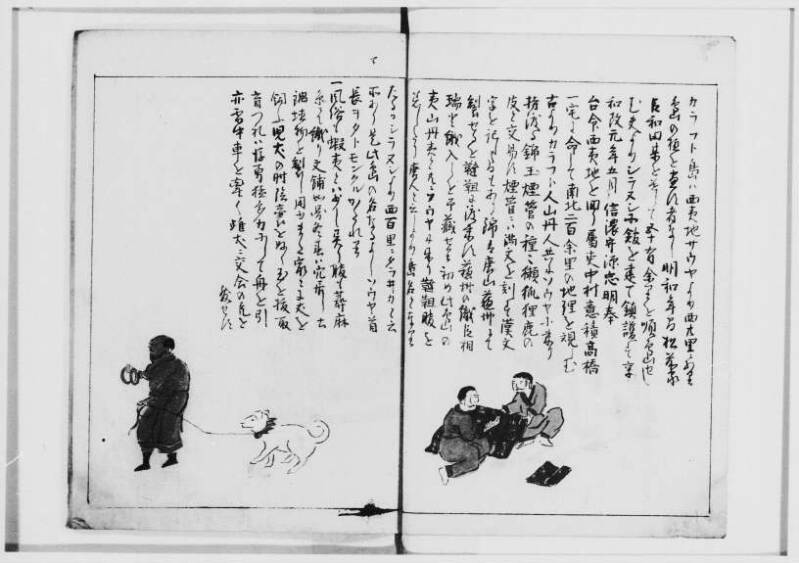
一風俗も蝦夷とは少し異り服も蕁麻
糸にて織り文鋪如図冬春は穴居し土
隅埴物を製し用ゆまた家々犬を
飼ふ児犬の時陰嚢をぬく玉を抜取
育つれは後勇猛多力にして舟を引
亦雪中車を牽く雌犬に交合の気を発せす
現代語訳
**カラフト島(樺太)について**
カラフト島は、西蝦夷地のソウヤ(宗谷)より西へ二十里のところにある。島の果てを極めた者はいない。明和年間(1764〜1772年)に、松前藩の家臣・和田某を派遣し、五十余里にわたって島を順に巡らせた。それ以来、シラヌシ(白主)に館を建てて島を鎮護した。享和元年(1801年)、信濃守・源忠明が台命を奉じて西蝦夷地を巡回し、属吏の中村意積・高橋一宅に命じて、南北二百余里にわたる地理を調査させた。
古くより、カラフト人(樺太アイヌ)と山丹人(サンタン人)がともにソウヤへ来て、持ち渡ってくる錦・玉・煙管などの種々の品々や、カワウソ・キツネ・タヌキ・シカの毛皮と交易を行っている。煙管には満洲文字が刻まれており、漢字を記したものもある。錦は唐山(中国)の蘇州で製造されたものが韃靼(タタール、中国北方民族地域)を経て渡来する。蘇州の織物に「織臣相瑞」と織り込まれたものを私(著者)は所蔵している。
はじめ、この島の夷(アイヌ)が山丹夷とともにソウヤへ来て韃靼の服装を着ていたため、「唐人」と呼ばれたことが島の名(カラフト)の由来となったのかもしれない。シラヌシより西へ百里のところに「タラヰカ」という場所があり、これがこの島の名前の由来であるとのことで、ソウヤの首長・ヲタトモンクルが語っていた。
**風俗・習慣について**
風俗も蝦夷(アイヌ)とは少し異なる。衣服は蕁麻(イラクサ)の糸で織られ、文様の布地は図のようである。冬と春は穴居し(地下に穴を掘って住み)、土で器物を製作して使用する。また、家々では犬を飼っており、子犬のうちに陰嚢を切開して睾丸を取り除いて育てると、後に勇猛で力強くなり、舟を引いたり、雪中で車(そり)を牽いたりする。また、去勢することで雌犬と交合しようとする気を起こさなくなる。
英語訳
**On Karafuto Island (Sakhalin)**
Karafuto Island lies some twenty *ri* to the west of Sōya (present-day Cape Sōya) on the western Ezo coast. No one has yet reached its northernmost extremity. During the Meiwa era (1764–1772), a retainer of the Matsumae domain by the name of Wada was dispatched and made his way along the island for more than fifty *ri*. Thereafter, a residence was established at Shiranushi (Shiraнуши) to serve as a post for administering the island. In the first year of Kōwa (1801), Shinano-no-kami Minamoto no Tadaaki, acting under orders from the authorities, toured the western Ezo territories, and commanded his subordinate officials Nakamura Iseki and Takahashi Kazutaku to survey the geography of the island over a distance of more than two hundred *ri* from north to south.
From ancient times, the people of Karafuto (Sakhalin Ainu) and the Santal people (Santan people) have come together to Sōya, bringing brocades, beads, pipes, and various other goods to trade, along with pelts of otter, fox, raccoon dog, and deer. The pipes are engraved with Manchu script, though some bear Chinese characters as well. The brocades are manufactured in Suzhou in China (唐山) and transmitted through the Tartar (Dattan) regions to reach these parts. Among my own collection is a piece of Suzhou silk woven with the mark "Shokushin Shōzui" (織臣相瑞).
It may be that the island acquired its name because the island's indigenous people (Ainu) would come to Sōya together with the Santan people dressed in Tartar clothing, and were referred to as "Chinese people" (*Tōjin*). Some twenty *ri* to the west of Shiranushi there is a place called "Taraika," which is said to be the origin of the island's name — or so the chief of Sōya, Otatomonkuru, has told us.
**On Customs and Way of Life**
The customs differ somewhat from those of the Ezo (Ainu). Their garments are woven from nettle (*Urtica*, イラクサ) thread, with patterned cloth as depicted in the accompanying illustration. During winter and spring they live in pit dwellings, and they make and use earthen vessels. Each household also keeps dogs; when the dogs are still puppies, the scrotum is cut open and the testicles removed, and the dogs raised in this manner grow to be fierce, powerful, and capable of pulling boats or hauling sledges through the snow. Furthermore, once castrated, the male dogs no longer display any inclination to mate with female dogs.