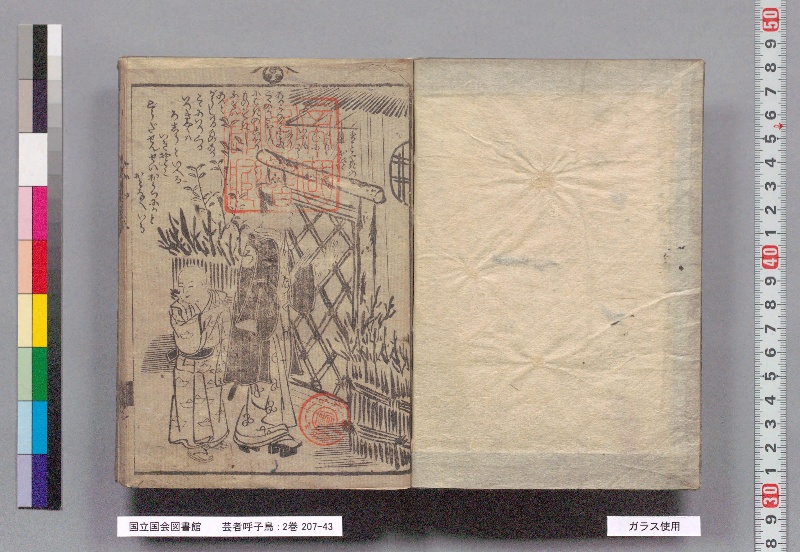
翻刻
まことや
花のおえど
は
日のもと
たい一にして
いふも
さら
なり
あるがなかに両
こくのかたほとり
小はぎのしほりと
ものすきし
ふすい
あんと
がうしけるものあり
こゝにいりくる
いつきやくは
ろしうといへる
いきおとこ
どうだせんせいおうちにかと
おとなへいる
【不明瞭な点を別の資料「注釈1」で補う】#1
現代語訳
まことに花の江戸は、日本一であって、言うまでもないことである。
その中でも両国の辺りに、小萩の塩という物好きで風流を愛する者がいた。
ここに出入りする一人の客は、六四郎という粋な男である。
「どうだ先生、お家にいらっしゃいますか」と大人しく入っていく。
【不明瞭な点を別の資料「注釈1」で補う】
英語訳
Truly, flowery Edo is the best in Japan, and this goes without saying.
Among all places, in the vicinity of Ryōgoku, there lived a person called Kohagi no Shiori who was fond of refined pursuits and elegant pastimes.
Here, a regular customer named Rokushirō, a sophisticated man, comes and goes.
"Well then, master, are you at home?" he says politely as he enters.
[Unclear points supplemented by separate source material "Annotation 1"]