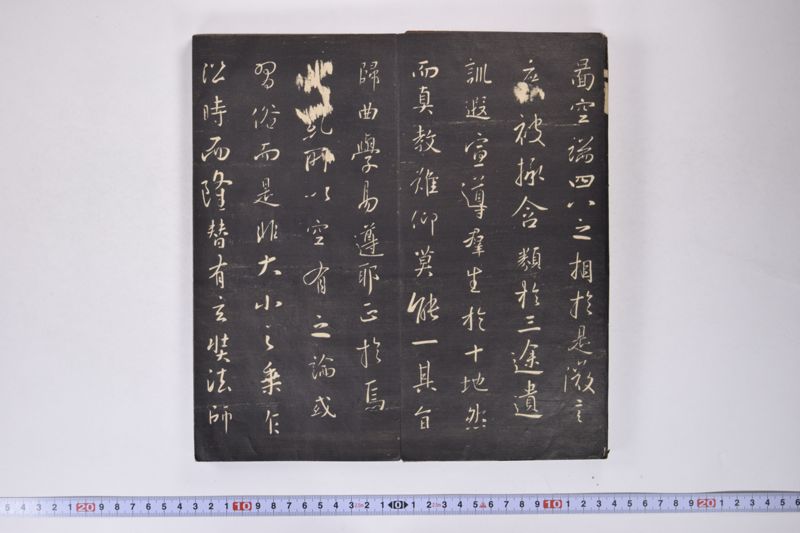
翻刻
図空端四八之相於是微言
広被拯含類於三途遺
訓遐宣導群生於十地然
而真教難仰莫能一其旨
帰曲学易遵耶正於焉
□糺所以空有之論或
習俗而是非大小之乗乍
沿時而隆替有玄奘法師
現代語訳
(麗しき御姿は開かれながらも、その)図は空しく端(かたわら)に置かれ、四八の相(仏の四十八相)は(世に)在りながらも(直接は仰ぎ見られなくなった)。ここにおいて、微妙なる言葉(仏の教え)は広く行き渡り、三途(地獄・餓鬼・畜生)に沈む含類(生きとし生けるもの)を救い、遺された訓えは遠く宣べ伝えられ、十地(の菩薩たちをはじめとする)群生を導いた。しかしながら、真の教えは仰ぎ難く、その帰するところの旨趣を一つに定めることができる者はなく、曲った学問(邪学)は遵い易く、正しきものを曲げてしまう(ありさまであった)。ここに、(様々な解釈をめぐる)空有の論(空観と有観の論争)は、或いは習俗に従って是非が問われ、大乗・小乗(の優劣)は、時の流れに沿って隆盛と衰退を繰り返した。(そこに)玄奘法師という方が……
英語訳
...the image remained open (to veneration), yet the figure was left empty to one side, and the forty-eight marks (of the Buddha) remained, yet could no longer be directly beheld. It was at this point that his subtle words spread far and wide, rescuing all sentient beings sunk in the Three Evil Paths (hell, hungry ghosts, and animals), and his bequeathed teachings were proclaimed afar, guiding all living beings through the Ten Stages (of bodhisattva practice). And yet, the true teaching was difficult to look up to, and there was none who could unify its essential meaning into one; deviant learning was easy to follow, and it distorted what was correct. Accordingly, the discourse on Emptiness and Existence (the debate between śūnyatā and *vijñaptimātratā*) was debated as right or wrong according to the customs of one's school, and the Mahāyāna and Hīnayāna vehicles rose and fell in turn with the flow of time. It was then that the Dharma Master Xuanzang...