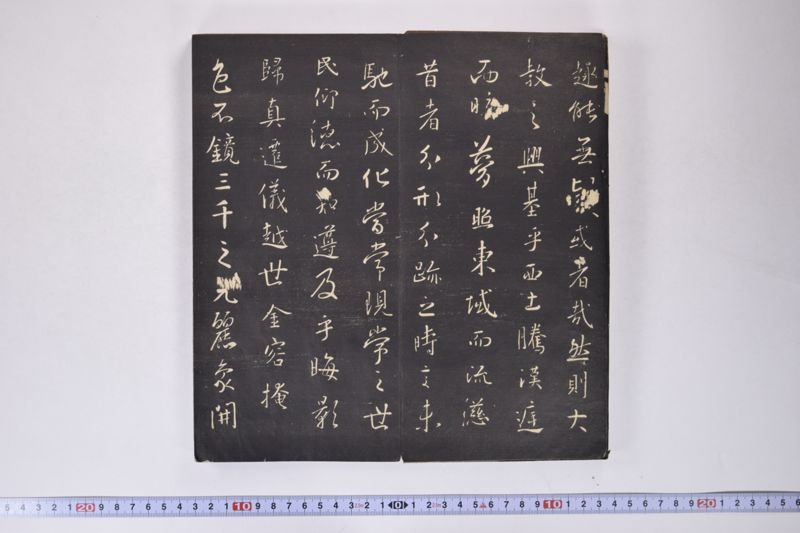
翻刻
趣能無疑惑者哉然則大
教之興基乎西土騰漢庭
而皎夢照東域而流慈
昔者分形分跡之時言未
馳而成化当常現常之世
民仰德而知遵及乎晦影
帰真遷儀越世金容掩
色不鏡三千之光麗象開
現代語訳
その趣旨に疑惑を抱かない者がいようか(いや、誰もが帰依するのだ)。しかしながら、大いなる教え(仏教)の興りは西方の国土(インド)に基づき、漢の宮廷に飛び渡っては皎(あきら)かな夢を照らし、東の国域(中国全土)に流れ渡っては慈悲を注いだ。昔、(仏が)形を分かち跡を分かちていたその時には、言葉が広まるより先に教化は成就していた。常に現れ、常に世に在り続けていたその世にあっては、民は(仏の)徳を仰ぎ見て、おのずとそれに遵う道を知っていた。ところが、(仏が)その影を晦(くら)ませて真(しん)に帰し、その儀(すがた)を遷(うつ)して世を越えられるに及んで、金色の御容(みかたち)は色を掩(おお)い隠し、三千(世界)を照らすはずの光は(もはやその鏡に)映じることなく、麗しき御姿(みすがた)は開かれながらも……
英語訳
Who, then, could harbor any doubt or confusion about its import? (Surely none.) And yet, the arising of the Great Teaching (Buddhism) was rooted in the western lands (India); it soared across to the Han court, illuminating a wondrous dream with its brilliance, and flowed eastward across the domains of the East, spreading compassion far and wide. In the days of old, when (the Buddha) manifested in different forms and traces across the world, transformation was accomplished even before words could travel. In that age when he constantly appeared and constantly dwelt among the world, the people looked up to his virtue and naturally came to know how to follow it. But when at last he dimmed his shadow and returned to the True, when he transferred his form and transcended this world — the golden countenance concealed its color, its light — which should have mirrored the three thousand worlds — no longer reflected, and the beautiful image, though it opened forth...