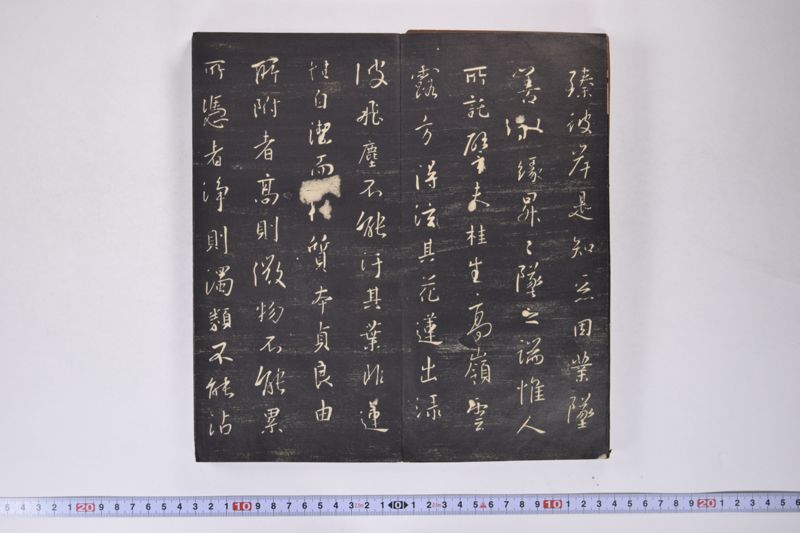
翻刻
臻彼岸是知悪因業墜
善以縁昇々墜之端惟人
所託譬夫桂生高嶺雲
露方得泫其花蓮出淥
波飛塵不能汙其葉非蓮
性自潔而□質本貞良由
所附者高則微物不能累
所憑者浄則濁類不能沾
現代語訳
(迷いの波を照らして)共に彼岸(悟りの境地)に至らしめた。これによって知るべし、悪(あく)は業(ごう)に因りて墜ち、善は縁(えん)によりて昇る。その昇墜(しょうつい)の端(はじまり)は、ひとえに人の頼みとするところ(環境・縁)によるのみ。たとえば、桂(かつら)は高嶺(こうれい)に生じて、雲や露によってはじめてその花を輝かせることができ、蓮(はす)は清き水の波より出でて、飛ぶ塵(ちり)もその葉を汚すことができない。これは蓮の本性が自ら潔(きよ)く、□(桂の)質(たち)が本来貞良(ていりょう)であるというわけではなく、よく附(つ)くところが高ければ、小さきものも累(わずらい)とはなり得ず、頼むところが浄(きよ)ければ、濁れるものも汚すことができないからに他ならない。
英語訳
...(brightening the dark waves) to bring all beings together to the Other Shore (the realm of enlightenment). From this we may understand: evil causes one to fall through the force of karma, while goodness causes one to rise through the power of karmic conditions. The beginning of this rising and falling depends entirely upon that which a person relies upon and takes refuge in. Consider, for example: the cassia tree grows upon the high mountain peak, and only through clouds and dew can its blossoms truly shine forth; the lotus rises from the pure rippling waters, and even the swirling dust cannot defile its leaves. This is not because the lotus is by nature pure of itself, or because the □ (cassia's) essence is originally upright and good — rather, it is because when that upon which one depends is lofty, then even small things cannot become a burden; and when that upon which one relies is pure, then even things of turbidity cannot defile it.