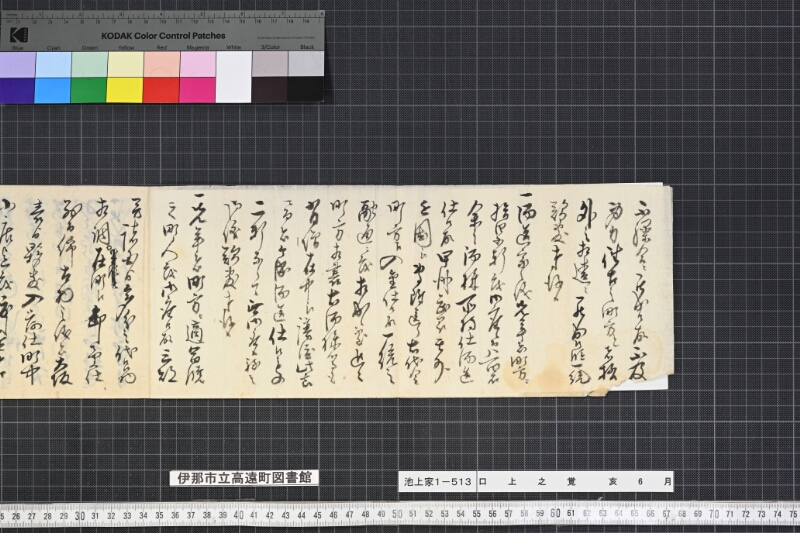
翻刻
【右丁】
不繰合ニ罷成候故不及
身力往古之町方とは格
外之相違ニ罷成候段一統
歎敷奉存候
一酒造家之儀先年は町方ニ
拾四五軒も御座候而八百石
余之酒株所持仕酒造
仕候故甲州武州其外
近国江専附送り右代金
町方江入金仕候故一統之
融通ニも相成候処近々
町方相衰右酒株等も
有増在中江譲渡此節
ニ而はケ成酒造仕候もの
二軒ならて無御座候様之
御儀歎敷奉存候
一先年は町方ニ適冨饒
之町人も御座候故三都
【左丁】
并諸国ゟ多分之代呂物
相調在町江卸売仕
別而綿太物之儀は大坂
表ゟ夥敷入荷仕町中
現代語訳
## 口上之覚(現代語訳・続き)
(前ページより続き)うまく立ち行かなくなってしまったため、自力ではどうにもならず、往古の町方とは比べ物にならないほどの違いとなってしまったことを、一同嘆かわしく存じております。
一、酒造家のことについては、先年は町方に十四、五軒もございまして、八百石余りの酒株を所持して酒造を行っておりましたため、甲州・武州その他近隣の国々へ専ら送り届け、その代金が町方へ入金されましたので、一統の融通にもなっておりましたところ、近ごろは町方が衰退し、その酒株なども大部分が在郷(農村部)へ譲り渡されてしまい、この節ではそれなりに酒造を行う者が二軒ほどしかございません様なことになってしまったことを、嘆かわしく存じております。
一、先年は町方に財産が豊かな町人もございましたため、三都(江戸・京・大坂)
(左丁へ続き)
ならびに諸国から多くの代物(商品)を仕入れ、在郷の町へ卸売りをいたし、とりわけ綿・太物(織物類)については大坂から夥しく入荷して町中(へ売りさばき)……
*(次のページへ続く)*
英語訳
## Memorandum of Oral Statement (Translation, continued)
*(Continued from previous page)* ...things have become unmanageable, and beyond our own power to remedy, resulting in a state of affairs utterly different from what this town was in former times — a situation that we all find deeply lamentable.
Item: Regarding the sake brewers — in former years, there were as many as fourteen or fifteen establishments in the town, holding sake brewing licenses (*sakakabu*) totaling over eight hundred *koku*, and they actively brewed sake. Because they shipped it primarily to Kōshū (Kai Province), Bushū (Musashi Province), and other neighboring provinces, the revenue from these sales flowed back into the town, which helped maintain the financial circulation among all residents. However, as the town has fallen into decline in recent years, most of these brewing licenses have been transferred to people in the surrounding rural villages (*zaichū*), and at present there are no more than two establishments that are doing any substantial brewing to speak of — a situation we find deeply lamentable.
Item: In former years, there were wealthy and prosperous merchants in the town, and so from the Three Metropolises (Edo, Kyoto, and Osaka)
*(Continued on left panel)*
...as well as from various provinces, large quantities of goods were procured and wholesaled to villages in the surrounding area. In particular, regarding cotton and woven cloth (*futomono*), vast quantities were shipped in from Osaka and sold throughout the town...
*(Continues on the next page.)*