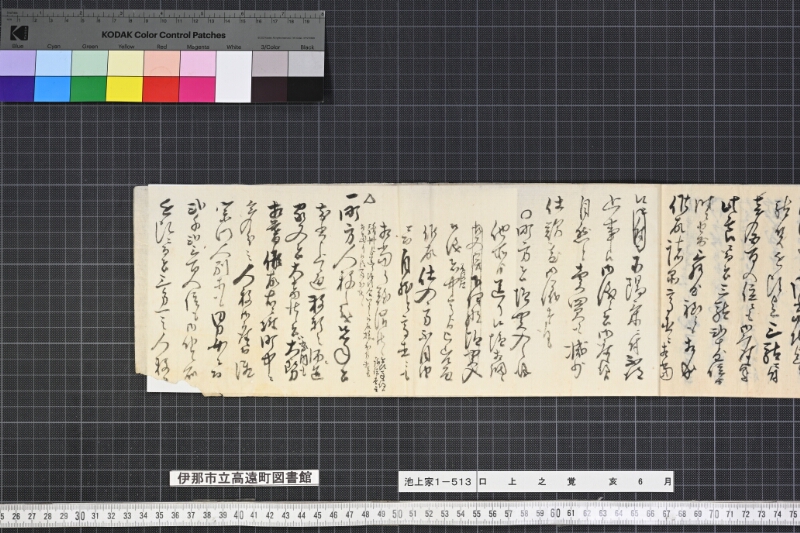
翻刻
【右丁】
駄賃近頃迄三駄ニ付
壱〆五百文位ニも御座候処
此節ニ而は三駄弐十匁位ゟ
時ニ寄三拾匁程ニも相成
候故諸品高直ニ相当
【左丁】
候《見せ消ち:ニ付□》不陽気ニ付不得
止事候御儀ニは御座候得共
自然と売買も減少
仕歎敷御儀奉存候
〇町方は塩買入之儀
他所ゟ送り候塩相調候
《見せ消ち:事并下伊那塩買入》
候儀は中馬(藤沢郷)ゟ被差留
候故仕入方不自由
ニ而自然と高直ニも
相当り難渋仕候《割書:近頃承候得ハ|諏訪表ニ而》
△ 《割書:駿州ゟ送り塩引合いたし候故格外下直ニも|相当り候様承知仕候》
一町方人数之義先年は
前書申上候通数軒之酒造
《割書:ハ家内も》
家又は大商仕候者大勢
相暮儀故右ニ准町中ニ
多分之人数御座候而御
宗門人別等も男女ニ而
弐千弐三百人位も御座候所
近頃ニ而は三分一之人数ニ
現代語訳
【右丁】
(前頁左丁の繰り返し)
駄賃はつい最近まで三駄につき一貫五百文ほどでございましたが、この節(今現在)では三駄につき二十匁ほど、時によっては三十匁ほどにもなっておりますため、諸品が高値となり、
【左丁】
不陽気のためやむを得ない事情とはございますものの、自然と売買も減少いたしまして、嘆かわしいことと存じております。
〇 町方が塩を買い入れる儀につきましては、他所より送り届けられる塩を調達することは、中馬(藤沢郷)より差し留められておりますため、仕入れが不自由となり、自然と高値にもなって難渋いたしております。
〔割書〕近頃承りますところによれば、諏訪において駿州より送り届けられる塩との引き合いがございますため、格外に安値にもなっているとのこと、承知いたしております。
△
一、町方の人数の儀につきましては、先年は前書きにて申し上げた通り、数軒の酒造家、また大きな商いをしております者が大勢暮らしておりましたため、それに準じて町中に多くの人数がおりまして、御宗門人別等も男女合わせて二千二、三百人ほどもございましたところ、近頃では三分の一の人数に……(次頁へ続く)
英語訳
[Right folio]
[Repetition of content from the left folio of the previous page]
…the cost of packhorse transport was until quite recently approximately 1,500 mon per three horse-loads, but at present it has risen to around 20 monme per three horse-loads, and at times even as high as approximately 30 monme, so that the prices of all manner of goods have risen accordingly,
[Left folio]
and although this is an unavoidable circumstance brought about by poor weather conditions, trade has naturally diminished as a consequence, which we find deeply lamentable.
〇 Regarding the purchase of salt by the townspeople — the procurement of salt sent from other places has been prohibited by the nakama packhorse operators (of Fujisawa-gō), and as a result the procurement of supplies has become difficult, naturally driving prices up and causing us considerable hardship.
[Interlinear note] We have recently heard that in the Suwa area, competition has arisen with salt being sent from Suruga Province, as a result of which prices there have reportedly fallen exceptionally low.
△
Item: Regarding the population of the town — in former years, as stated in the foregoing, there were several sake breweries, and a great many people engaged in large-scale commerce lived here. Accordingly, the town was home to a large population, and the temple parish registers (shūmon-ninbetsu) recorded approximately 2,200 to 2,300 persons of both sexes. However, in recent times, this has fallen to one-third of that number… [continues on next page]