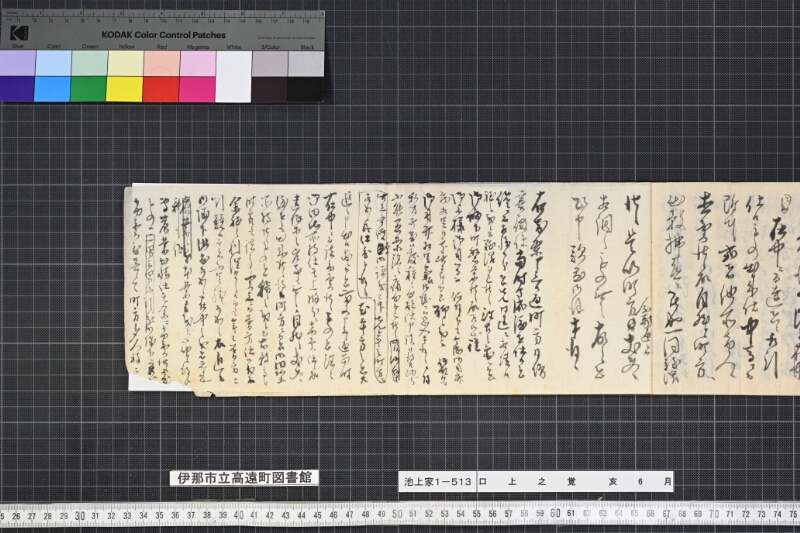
翻刻
【右丁】
在中ニ而達者ニ取引
仕候もの出来仕中馬ニ而
附出し或者他所商人へ
直売仕候故自然と町方へ
出穀払底ニ罷成一同難渋
【左丁】
不融通ニ而
仕候是以町方ゟ支配夫へ
相調候もの無之故ニ候以上
乍申歎敷御後奉存候
右別条申上候通町方日増
衰微仕当時ヶ成渡世仕候以上
纔ニ而相残候義は先同違ニ相凌候
程之義ニ而難渋而已仕候往古之處ニ而ハ
御城下町繁栄仕候故乍恐従
御上様御用等被 仰付候而も今洲御用弁
も相足候処此節ニお着聊之義被 仰付候も
御用弁相響候義御儀ニ而恐入奉存候ニ付
私共折寄候処種々心配仕申談候得共何分
【『』内は四角に囲われている】
不能愚案銘々痛心而已仕候 【『】間何者は
此上有仕候評■(厚)御□義被下先年之町方へ
相成候様仕度奉存候 【』】尤平方之者共
追々申出候処ニ而は前文申上候通当時
在中ニ而諸商売仕候もの者銘々
御田代所持仕其上余分ニ商売仕候故
違作等之差支も無之自然と丈夫ニ
渡世も出来仕候得共町方ニ而は御田場等
所持仕候もの者稀之義ニ而右穀高□
時節も諸事買上ニ而暮方仕候義は
余程之利潤有之候而も□□暮方ニ
引競候而は不足勝ニ相成候右追々
御城下此度相成候在中之義者元来
《見せ消ち:□□□》本業□義は届き候得は
耕作
専農業出精仕其余ニ商売仕候尤
ものは一男三男引御渡下候節□
商売致呉候て町方多人数被
現代語訳
【右丁】
(前頁より続き)在中(農村)において達者に取引をいたす者が出来いたし、中馬にて(他所へ)附け出し、あるいは他所の商人へ直売いたしますため、自然と町方へ出穀が払底となりまして、一同難渋……
【左丁】
……不融通にて難儀をいたしております。これにより、町方から支配夫(領内の夫役労働者)へ調達できるものもございませんゆえ、以上のとおりでございます。申し上げることすら嘆かわしく、御上に対し恐れ入り奉り存じ候。
右に別条として申し上げました通り、町方は日増しに衰微いたし、当時(現在)かろうじてそのような渡世(生計)を立てております。わずかに残っております者は、以前と同じように凌いでいる程度のことで、難渋ばかりいたしております。往古(昔)においては、御城下の町が繁栄いたしておりましたゆえ、恐れながら御上様より御用等を仰せ付けられましても、その御用弁(御用の調達・処理)も十分に相足りておりましたところ、この節(今現在)においてはわずかな御用を仰せ付けられましても、御用弁に差し響く(支障をきたす)次第でございまして、恐れ入り奉り存じ候。これにつき、私どもが寄り集まり、種々心配いたし申し談じ候えども、何分にも愚案(よい考え)も思い浮かばず、銘々(各自)痛心ばかりいたしております。
【枠囲み部分】
この上は(何とか)厚き御□義(御配慮・御措置)を下され、先年の町方の様子へと相成り候ようにいたし度く存じ奉り候。
【枠囲み部分ここまで】
もっとも、町方の者共が追々申し出ております処によれば、前文に申し上げました通り、当時(現在)、在中(農村)において諸商売をいたします者は、銘々(各自)御田地(田畑)を所持いたし、その上、余分に商売もいたしておりますゆえ、違作(凶作)等の差し支えもなく、自然と丈夫に(しっかりと)渡世(生計)も立てることができております。しかしながら、町方においては御田場(田畑)等を所持いたします者は稀なることで、右(前述の)穀高の不足する時節には、諸事買い上げにて暮らしをいたしますことは、余程の利潤(利益)がございましても、□□暮らしに引き比べますと不足勝ち(不足がちな状態)となってしまいます。右(このように)追々と御城下がこのようになりました次第で、在中(農村)のことは元来(もともと)、本業(農業)□の義は届き候えば、耕作を専らとし農業に出精(精を出す)し、その余(余力)に商売をいたします。もっとも、(農家の)二男・三男を引き渡し下され候節□、商売をいたし呉れ候て、町方に多くの人数が……(次頁へ続く)
英語訳
[Right folio]
[Continued from previous page] …persons skilled in trade have emerged in the rural villages, and [grain] is being sent out via nakama packhorse transport or sold directly to merchants from other areas. As a result, the supply of grain flowing into the town has naturally run short, and all [townspeople] are suffering hardship…
[Left folio]
…and are in a state of financial inflexibility and difficulty. For this reason, there is nothing that can be procured from the townspeople for the domain's corvée laborers (shihaibe), and that is how matters stand. We find it distressing even to have to report this, and humbly beg your understanding.
As stated above in the various items we have presented, the town is declining day by day, and those currently [living there] are barely managing to eke out a livelihood. Those who remain are merely getting by in much the same way as before, suffering nothing but hardship. In former times, as the castle town was flourishing, even when tasks and duties were assigned to us by the authorities — with all due deference — we were fully able to carry out and supply what was required. However, at the present time, even when the most minor duties are assigned to us, they create a strain on our capacity to fulfill them, which we find most distressing and humbling. Gathering together on this matter, we have deliberated with various concerns, but we are utterly unable to arrive at any good plan, and each of us is burdened with nothing but anguish.
[Boxed section]
We humbly wish that, beyond this point, generous measures [and consideration] be extended to us, so that the town may be restored to the state it was in in former years.
[End of boxed section]
Moreover, as the townspeople have been petitioning one after another, as stated in the foregoing text, at the present time those who engage in various trades in the rural villages each possess agricultural land (rice paddies and fields), and moreover conduct trade as a supplementary activity. Therefore, even in the event of a poor harvest, they face no serious difficulties, and are naturally able to make a firm and stable living. In the town, however, those who own agricultural land are rare, and in seasons when the aforementioned grain supply falls short, having to purchase everything for daily sustenance means that, even if a considerable profit [is made in trade], when compared to [rural] livelihoods, [the townspeople] tend to come up short. It is in this way that the castle town has gradually come to its present state. As for the villages, they were originally [engaged in their] primary occupation [of farming] — once [farming] needs are attended to, they devote themselves exclusively to cultivation and agricultural work, and conduct trade only as a secondary activity. Moreover, second and third sons [of farming families] having been sent [to the town] at the time [of its founding] □, [they were expected to] engage in commerce and [help] the town be populated with many people… [continues on next page]