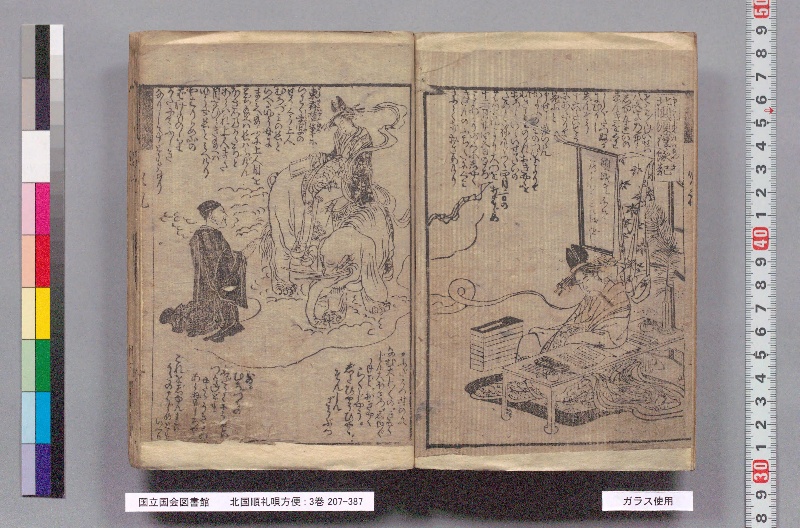
翻刻
《題:北国順礼縁起(ほくこくじゆんれいゑんぎ)》
そも〳〵けいせい
八文字道中
じゆんれいの
ゑんぎをくわ
しくたつぬる
にむかし
しんぞう
十六たいてう【だいてう=台帳?あるいは大町(吉原五町のこと)?】
にあたりて
花山と
申せしおいらん
かよふかみのつげによりて
此さとをのがれおきやくを
おろしいらいせたいの
ためとねんじつゝ正月二日の
はつ礼より大門を打はじめ#2
十二月廿四五日のころ
みあがりのくにしやく
きんのふちたにぐみ#1
にて打おさめけり#3
東斉随筆(とうさいすいひつ)に
いわく書写(しよしや)の
せうくう上人
むろづみの長と
いへるゆう女に
まみへ給ふに上人目を
とぢ給へは長はふげん
ほさつのかたちと
あらはれ上人また
目をひらき給へば
ゆう女長とみへけり#6
やはりかめ山の
ばけものゝ里
かたにてふしき
なりし事どもなり#7
・ふだうつ時の文
なむ大じ〳〵の。きやく
じん大ほさつ。じゆ〴〵
手ごと。おきやく
らくじやう。
じたひやうひゃく。
そんしん
ざうぶつ#5
哥に
むろづみの
じだらくにうそは
つかねども
やたらうきたつ
あらおもしろや#8
これをじゆんれい
うたのはじめとも
いへり
現代語訳
## 北国巡礼縁起
そもそも傾城(けいせい)八文字道中巡礼の縁起を詳しく尋ねるに、昔、新造が十六大町(だいちょう)にあたりて、「花山」と申せしおいらんが、通う神のお告げによりて、この里を逃れ、お客をおろし(迎え入れ)、以来、生計のためと念じつつ、正月二日の初礼より大門を打ち始め、十二月二十四・五日のころ、見上がりの国尺、金の縁谷組にて打ち収めけり。
『東斎随筆』に曰く、書写の性空上人が、室積(むろづみ)の長(ちょう)という遊女に見えなさるに、上人が目を閉じなさると、長は普賢菩薩の姿として現れ、上人がまた目を開きなさると、遊女の長と見えけり。やはり亀山の化け物の里方にて不思議なりし事どもなり。
・札を打つ時の文(もん)
南無大慈大悲の客人大菩薩。呪々(じゅじゅ)手ごと。お客楽生(らくじょう)。自他平百(じたひゃく)。尊身造仏(そんしんぞうぶつ)。
歌に、
室積の
自堕落にうそは
つかねども
やたらうき立つ
あら面白や
これを巡礼歌の始めとも言えり。
英語訳
## The Origin of the Northern Province Pilgrimage
To thoroughly investigate the origin of the "Eight-Character Procession Pilgrimage" of courtesans (keiseis): In ancient times, there was an oiran (high-ranking courtesan) called "Hanazan," who had been a shinzō (apprentice courtesan) in the sixteen great blocks (of the Yoshiwara). By a divine oracle that came to her, she escaped from this pleasure quarter, received guests (on her own terms), and thereafter, praying for her livelihood, she began striking (the pilgrimage tablets) at the great gate on the second day of the New Year as the first ritual, and concluded with the final ceremony around the 24th or 25th day of the twelfth month, using the "nation's measure of seeing-off gold," in the fringed valley style.
According to the Tōsai Zuihitsu (Essays of Tōsai): When the holy monk Shōkū of Shosha visited a courtesan named "Chō" of Murozumi, upon closing his eyes, Chō appeared in the form of Fugen Bosatsu (Samantabhadra Bodhisattva), and when he opened his eyes again, she appeared as the courtesan Chō once more. This was indeed among the wondrous happenings in the haunted village district of Kameyama.
• The inscription for striking the pilgrimage tablets:
Namu (I take refuge in) the great compassionate Guest-Deity Great Bodhisattva. Incantation, incantation, by each hand. May guests attain ease and rebirth. Equal blessings for self and others, one hundredfold. May the venerable body become a Buddha.
In verse:
Though at Murozumi's
dissipated place, no lies
are told—
yet strangely, spirits
rise and float away—
how delightful!
This verse is also said to be the beginning of the pilgrimage songs.