翻刻
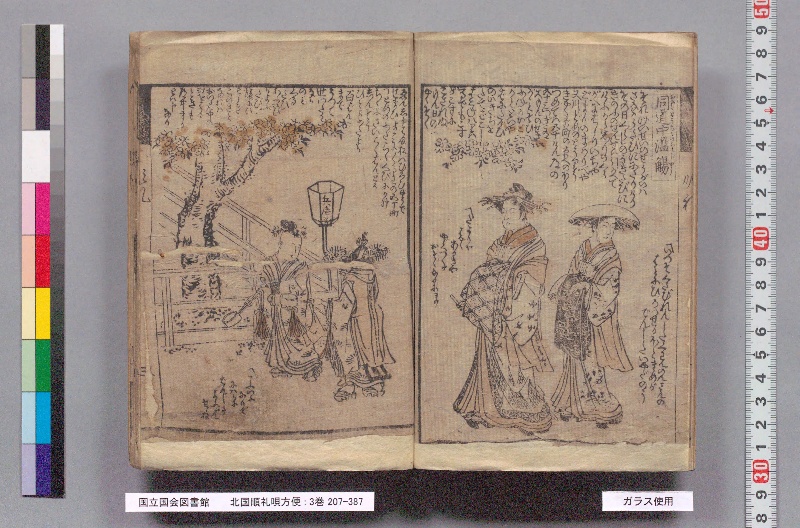
《題:同道中濫觴(おなしくとうちうらんじやう)》
それけいせいのせうがいは
さなからたびににたりけり
その日くらしのうきたびに
きのふのせんせい引かへて
けふからしりのくら
がへにはしりいちや
どまりのまはりべや
又川どめのとうりう
きやく《場所:京町》#1の京へのほり
つめては《場所:五十けん道》#2の
五十三つぎ有
大もんのせき
がゝとそひへ
ふねかかご
かとといや
ばにたがひ
のいきぢを
たてばこし
はこね八里は
馬でもこす
がこすに
こされぬ
もん日#3の
やくそく
ゑんしうはま松はひろひやうで
せまひよこにくるわの五十町
つとめのふだらくくびにかけ
ちゝぶさいこくばんどう
しんそう
ひとよふたよが
百ばん
まで
うつて
世わたる
なか
のみ【れ脱か】#3
くる
たび
あふたび
かよふ
たび
旅にひ
としき
このさと
なれは
おいらん《場所:中の
町》をはる
ときも
道中する
とは申
なり
【編み笠の遊女、花魁に「たより」と呼ばれている】
〽いつそくたびれんしたくわんのんさんの
はとにひろはせるほとまめが
でんしたいやだのう
【花魁】
〽たよりや
はやく
あるきや
やどへつくが
おそくなるにヨウ
【禿たち】
〽かふいう
なりで
にはかに
でんした
よふ□ん【よふざん】
せ□ね【せふね】
【紙を重ねて破れを修復した跡があり最後二行は一文字ずつ消えている】
現代語訳
《題:同道中濫觴(同じく道中の始まり)》
それ遊女の生涯は
全く旅に似ていた
その日暮らしの憂き旅に
昨日の先生に引き替えて
今日から尻の鞍
替えに走り一夜
泊まりの回り部屋
また川止めの逗留
客の京への上り
詰めては
五十三次ある
大門の関
ががりと添えて
船駕籠
かといや
馬に違いの
行き道を
立てば腰
箱根八里は
馬でも越す
が越すに
越されぬ
文日の
約束
遠州浜松は広い様で
狭い横に廓の五十町
勤めの補陀落首にかけ
秩父西国坂東
新装
一夜二夜が
百番
まで
打って
世を渡る
中の
巡れ
来る
旅
会う旅
通う
旅
旅に人
としき
この里
なれば
花魁中の
町を張る
時も
道中する
とは申す
なり
【編み笠の遊女、花魁に「たより」と呼ばれている】
〽一足疲れ申した観音さんの
鳩に拾わせるほど豆が
出ました嫌だなあ
【花魁】
〽便りや
早く
歩きや
宿へ着くが
遅くなるよ
【禿たち】
〽こういう
なりで
にわかに
出ました
夜船
背負いね
英語訳
《Title: The Same - Origins of the Procession》
The life of a courtesan
was entirely like a journey.
In the melancholy travels of living day by day,
changing from yesterday's patron
to today's change of
saddle at the rear, rushing to one-night
stays in visiting rooms,
or lodging during river closures.
Patrons going up to Kyoto,
when concentrated, there are
fifty-three stations.
The great gate's checkpoint
clings closely,
boat palanquins,
or rather
on horses of different
routes.
When standing, the lower back—
Hakone's eight ri
even horses cross,
but what cannot
be crossed
is the promise
of the appointed day.
Enshū Hamamatsu appears wide
but narrow sideways, the quarter's fifty chō.
Hanging the service Potalaka around the neck,
Chichibu, Western Provinces, Bandō—
new attire.
One night, two nights up to
one hundred temples,
striking bells
to make a living
in this world of
pilgrimage.
Coming
journeys,
meeting journeys,
visiting
journeys.
In journeys with people
and familiarity,
this quarter
therefore
when the oiran parades
through Naka-no-
chō,
it is also called
a procession.
【A courtesan in a woven hat, called "Tayori" by the oiran】
〽One step tired, I've become so tired that the pigeons
at Kannon's temple could pick up
the beans that have spilled—how annoying!
【Oiran】
〽Tayori,
hurry up
and walk,
or we'll arrive
at the inn late!
【Kamuro attendants】
〽In such
attire
we suddenly
departed—
night boat,
carry it on your back!