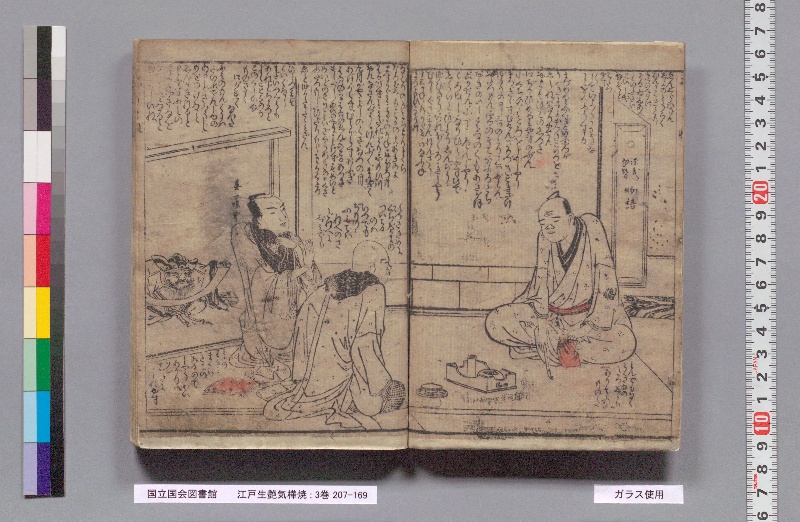
翻刻
ゑん二郎はきん
じよのどうらく
むすこきたり
きのすけ
わるゐしあん
といふたい
こいしや
なぞと
こゝろ
やす
く
していよ〳〵うわきな
ことをくふうする
まづめりやすといふやつが
うはきにするやつさこいつを
しらねばなりやせん
およそひとのしつた
口ぢかひ【口近い】めりやすのぶん
小くちのところを申やしやう
まつ、きゝす、むけんさかづき、ときざけ
、ゆかりの月、三つのとり、三つぶとん
ふたつもん、四つのそて、かふろだち#1
、おきのいし、はなのくも、あさがほ
、六かせん、小丁【小町】へんしやう【遍照】、
くろぬし、なりひらにやすひで
しらいと、ひとりしんじう、
ゆびきり、いれぼくろ、きしやう【起請】
むかしぐさ、まんねんさう
十三がね【十三鐘】、水かゝみ、いなふね
まつよひ#3、わかれ
なごりのもみぢ、かりまくら
なつごろも、はるのよ、あきのよ
ますかゞみ、よわのかね、おぼろ月
はるがすみ、みだれどり、おもひ川
おんなさんぐう、げんぶく、まんぎく
九月がや、よしのくさ、なつの月
あけがらす、むらがらす、あふぎ
はなのか、はるのゑん、のこるあつさ
さしぐし【差櫛】、あいのやま【間の山】#2、とけず、そめいと
めいどのとり、こいざくら、あきの七くさ
ふたつもじ、ひだりもじ、わかこゝろ【我心】
ゑとゆかた、たゝみざん
ひとつみぞ
こいばなし
まだいつくらも
あれどちよつと
したところか
このくらいな
ものさアヽ
口がすく
なつた
ふみのもんくには
たいぶでんじゆの
あることさふうじ
めをつけぬと
ゑんがきれると
申しやすふみの
すへゝおさな【幼名】を
かくよふになると
[むず]かしいね
【掛け軸】
《割書:源氏|伊勢》物語
【艶二郎の台詞】
とんでもなく
うきなの
たつしうちか
ありそふな
ものた
【悪い友達の台詞】
ひつさきめに
くちべにの
ついてる
のは
いつでも
ぢものゝ
ふみては
ねへのさ
どねへに
じみでも
みゝの
わきに
まくら
たこの
あるので
しやうばい
あがりは
ソレ
しきに【じきに】
しれやす
現代語訳
縁二郎は近所の道楽息子、北利喜之助や悪い仲間といった大工町などと心安くしており、いよいよ浮気なことを工夫するようになった。
まず、恋文というものが浮気をするのに必要なものだから、これを知らなければならない。およそ人の知っている口に近い恋文の文言の小口のところを申し上げよう。
まず、聞き捨て、無縁杯、解酒、ゆかりの月、三つの鳥、三つ布団二つ紋、四つの袖、上臈立ち、沖の石、花の雲、朝顔、六歌仙、小町遍照、黒主、業平に安秀、白糸、独り心中、指切り、入れ黒子、起請、昔草、万年草、十三の鐘、水鏡、稲船、待宵、別れ、名残の紅葉、仮枕、夏衣、春の夜、秋の夜、増鏡、夜半の鐘、朧月、春霞、乱れ鳥、思ひ川、女三宮、元服、万菊、九月萱、吉野草、夏の月、明け烏、群烏、扇、花の香、春の縁、残る暑さ、差櫛、間の山、解けず、染糸、冥途の鳥、恋桜、秋の七草、二つ文字、左文字、我心、絵と浴衣、畳算、一つ溝、恋話
まだいくらでもあるが、ちょっと試したところがこのくらいのものさ。ああ、口が渇いた。
文の文句にはたいぶ伝授のあることさ。風字目をつけないと縁が切れると申す。易しい文の末へ幼名を書くようになると難しいね。
【掛け軸】
《割書:源氏・伊勢》物語
【縁二郎の台詞】
「とんでもなく浮名の立つうちがありそうなものだ」
【悪い友達の台詞】
「筆先に口紅のついているのは、いつでも地物の文ではないのさ。どこにでも地味でも、耳の脇に枕蛸のあるので、商売上がりはそれですぐに知れやすい」
英語訳
Enjirō became friendly with the local pleasure-seeking sons like Kitariki no Suke and bad companions from places like Daiku-machi, and began devising increasingly romantic schemes.
First, since love letters are essential for having affairs, one must learn about them. Let me list some of the well-known opening phrases for love letters that people are familiar with:
First, there are "kikisute" (cast aside after hearing), "muen sakazuki" (cup of no connection), "toki-zake" (loosening sake), "yukari no tsuki" (moon of connection), "mittsu no tori" (three birds), "mittsu futon futatsu mon" (three futons, two crests), "yottsu no sode" (four sleeves), "kōrō-dachi" (court lady style), "oki no ishi" (offshore stones), "hana no kumo" (flower clouds), "asagao" (morning glory), "rokkasen" (six poetic geniuses), "Komachi Henshō" (the poets Komachi and Henshō), "Kuronushi," "Narihira ni Yasuhide" (Narihira and Yasuhide), "shiraito" (white thread), "hitori shinjū" (solitary love suicide), "yubikiri" (pinky promise), "irebokuro" (beauty mark), "kishō" (written vow), "mukashi-gusa" (ancient grass), "mannen-sō" (perennial plant), "jūsan-gane" (thirteen bells), "mizu-kagami" (water mirror), "ina-fune" (rice boat), "matsuyoi" (waiting evening), "wakare" (parting), "nagori no momiji" (lingering autumn leaves), "kari-makura" (temporary pillow), "natsu-goromo" (summer robe), "haru no yo" (spring night), "aki no yo" (autumn night), "masu-kagami" (square mirror), "yowa no kane" (midnight bell), "oboro-tsuki" (hazy moon), "haru-gasumi" (spring mist), "midare-dori" (confused birds), "omoi-gawa" (river of thoughts), "onna Sangu" (Third Princess), "genpuku" (coming of age), "man-giku" (ten thousand chrysanthemums), "kugatsu-gaya" (September reeds), "Yoshino-gusa" (Yoshino grass), "natsu no tsuki" (summer moon), "ake-garasu" (dawn crow), "mura-garasu" (flock of crows), "ōgi" (fan), "hana no ka" (flower fragrance), "haru no en" (spring feast), "nokoru atsusa" (lingering heat), "sashi-gushi" (ornamental comb), "ai no yama" (mountain of love), "tokezu" (unmelting), "some-ito" (dyed thread), "meido no tori" (bird of the underworld), "koi-zakura" (love cherry), "aki no nana-kusa" (seven autumn grasses), "futatsu moji" (two letters), "hidari moji" (left letters), "waga kokoro" (my heart), "e to yukata" (pictures and summer kimono), "tatami-zan" (tatami calculation), "hitotsu mizo" (one ditch), "koi-banashi" (love story).
There are still countless more, but this gives you an idea of what I mean. Ah, my mouth has gotten dry from all this talk.
There's quite a bit of secret knowledge in composing letters. They say if you don't pay attention to the "wind character," the relationship will end. It becomes difficult when you get to writing childhood names at the end of simple letters.
[Hanging scroll]
《Small print: Genji and Ise》 Monogatari (Tales)
[Enjirō's dialogue]
"There must be some incredibly scandalous affairs to be had!"
[Bad friend's dialogue]
"When there's lipstick on the brush tip, it's never from a genuine local letter. No matter how modest the location, you can tell right away from the pillow marks by the ears - that's how you know the business is ruined."