翻刻
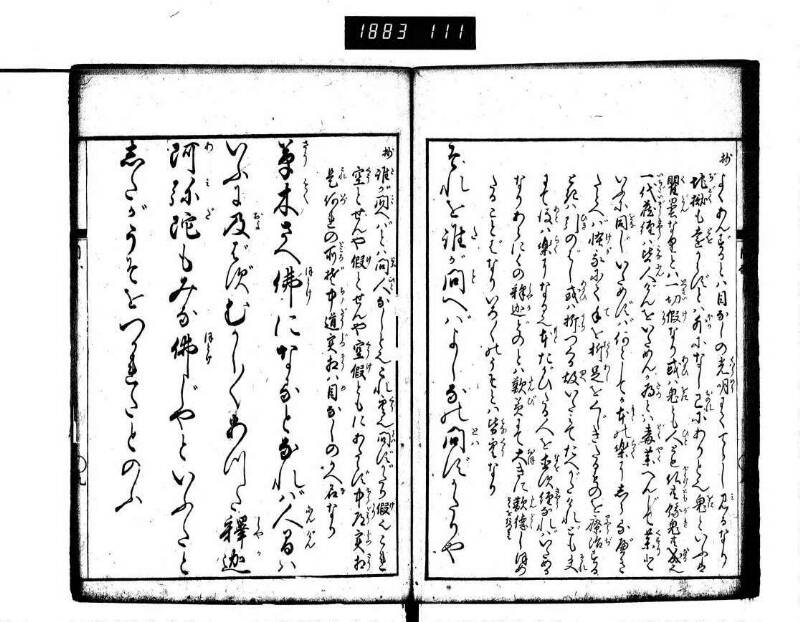
抄
よくあんずるとは目なしの光明(くはうめう)にてらし見(み)るなり
地獄(ぢごく)も遠(とを)からずとは外(ほか)になし己(おのれ)にありと也 鬼(をに)といふは
瞿曇(くどん)なりとは一切(いつさい)《振り仮名:仮|け|かり》なり或(あるひ)は鬼(をに)とも人(ひと)とも仏(ほとけ)共(とも)餓鬼(がき)共 成(なる)也
一代蔵経(いちだいぞうきやう)は皆(みな)人(にん)げんをいためんが為(ため)とは毒薬(どくやく)へんじて薬(くすり)と
いふに同(をな)じいためずば何としてか本(もと)の楽(らく)にしらるべき
たとへば怪我(けが)にて手(て)を折(おり)足(あし)をくじきたるものを療治(りゃうぢ)する
ときは引(ひき)のばし或(あるひ)は折(かち)つくる故(ゆへ)いたみてたへがたけれども夫(それ)
にて後(あと)は楽(らく)になる也 本(もと)たがひたる人を直(なを)す経(きやう)なればいためる
なりあらにくの釈迦(しやか)どのとは歎美(たんび)にて大(おほ)きに《振り仮名:歎徳|たんどく|とくをたつとみ》しほめ
たることばなりいろ〳〵のうそとは皆(みな)空(くう)なり
それを誰(たれ)が問(と)へばよしなの問(とは)ずかたりや
抄
誰(た)が問(と)へばとは両(とふ)人(ひと)なしと也これ空(くう)也 問(とは)ずがたり仮(け)也これ
空(くう)とせんや仮(け)とせんや空(くう)仮(け)ともにあたらず中道(ちうどう)実相(じつさう)
是(これ)何(いづ)れの所(ところ)ぞ中道(ちうだう)実相(じつささう)は目(め)なしのかへ名(な)なり
草木(さうもく)さへ仏(ほとけ)になるとなれば人間(にんげん)は
いふに及(およ)ばずむかし〳〵あつた釈迦(しやか)
阿弥陀(あみだ)もみな仏(ほとけ)じやといふたと
したがうそをつかれたとのふ
現代語訳
抄
よく考えるということは、目なしの光明によって照らし見ることである。
地獄も遠くないというのは、外にはなく己にあるということである。鬼というのは
瞿曇(釈迦)のことであるというのは、一切は仮のものであるということである。あるいは鬼とも人とも仏とも餓鬼ともなるのである。
一代蔵経は皆人間を痛めるためであるというのは、毒薬が変じて薬と
いうのと同じで、痛めなければどうして元の楽を知ることができようか。
例えば怪我で手を折り足をくじいた者を治療する
時は引き伸ばし、あるいは折りつけるので、痛くて耐え難いけれども、それ
によって後は楽になるのである。元々違っている人を直す経なので痛めるの
である。「ああ憎い釈迦殿」というのは歎美であって、大いに徳を讃え
たたえた言葉である。いろいろの嘘というのは皆空である。
それを誰が問えばよしなの問わず語りや
抄
誰が問えばというのは、問う人がいないということである。これ空である。問わず語りは仮である。これを
空とすべきか仮とすべきか。空・仮ともに当たらず、中道実相である。
これは何れの所ぞ。中道実相は目なしの別名である。
草木さえ仏になるとなれば、人間は
言うに及ばず。昔々あった釈迦や
阿弥陀もみな仏じゃと言ったと
して、嘘をつかれたと言うのか。
英語訳
Extract
To carefully consider means to illuminate and see through the light of "without eyes."
Hell is not far away means it is not external but exists within oneself. The demon referred to as
Gautama (Shakyamuni) means that all things are provisional. Sometimes one becomes a demon, sometimes a human, sometimes a Buddha, sometimes a hungry ghost.
The Buddhist canon of one lifetime exists to cause pain to human beings, which is the same as poison transforming into medicine.
Without pain, how could one know the original pleasure?
For example, when treating someone who has broken their hand or sprained their foot in an accident,
one must stretch and sometimes reset the bones, causing unbearable pain, but afterwards
it becomes comfortable. Since these are scriptures to correct people who have gone astray, they cause pain.
"Oh, how hateful is Shakyamuni Buddha" is actually praise, words that greatly honor and
extol his virtue. The various lies all refer to emptiness.
Who would ask about that—what an unnecessary tale told without being asked
Extract
"Who would ask" means there is no one to ask. This is emptiness. Unsolicited storytelling is provisional. Should this be
considered emptiness or provisional? Neither emptiness nor provisional applies—it is the Middle Way, true reality.
Where is this place? The Middle Way and true reality are alternative names for "without eyes."
If even plants and trees become Buddha, then for human beings
it goes without saying. Long, long ago there were Shakyamuni and
Amida Buddha, and if one says they were all Buddhas,
are you saying they were telling lies?