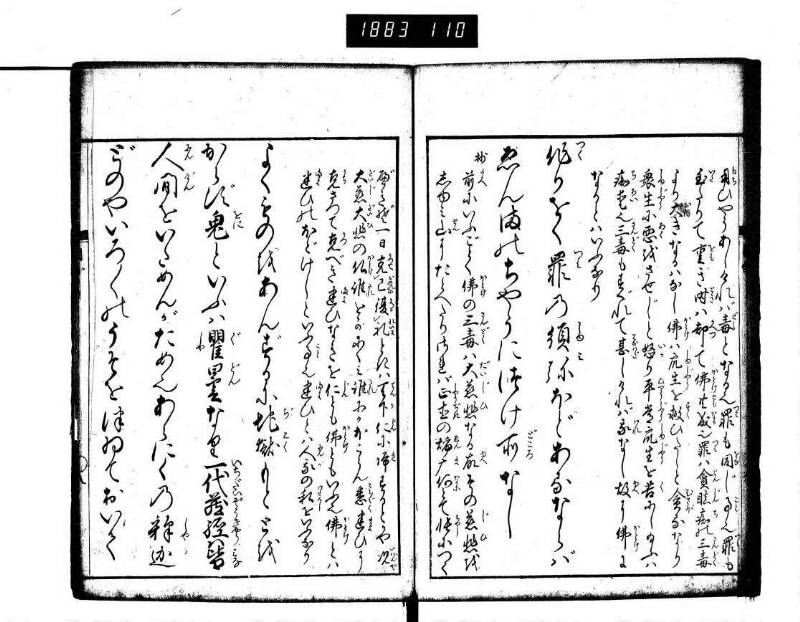
翻刻
用(もち)ひやうあしければ毒(どく)となる也 罪(つみ)も同(をな)じ事(こと)也 罪(つみ)も
至(いた)たりて重(をも)き時(とき)は却(かへつ)て仏(ほとけ)共(とも)成(なる)也 罪(つみ)は貪瞋痴(とんじんち)の三毒(さんどく)
より大(おほ)きなるはなし仏(ほとけ)は衆生(しゆじやう)を救(すく)ひたしと貪(むさぼ)るなり
衆生(しゆじやう)に悪(あく)をさせじと怒(いか)り平常(ひやうじやう)衆生(しゆじやう)を苦(く)にし給ふは
痴愛(ちあい)也 三毒(さんどく)もすぐれて甚(はなはだ)しければ我(われ)なし故(ゆへ)に仏(ほとけ)に
なるとはいふなり
作(つく)りをく罪(つみ)の須弥(しゆみ)ほどあるならば
ゑんまのちやうにつけ所(どころ)なし
抄
前(まへ)にいふごとく仏(ほとけ)の三毒(さんどく)は大慈悲(だいじひ)なる故(ゆへ)その慈悲(じひ)を
しゆみ山(せん)にたとへたりされば正直(しやうぢき)の焔魔(ゑんま)何(なに)とて帳(ちやう)につく
へきぞ一日 克(かつて)_レ已(おのれに)復(かへる)_レ礼(れいに)ときは天下(てんか)仁(じん)に帰(き)するとかや況(いはんや)
大慈(だいじ)大悲(だいひ)の仏(おhとけ)誰(たれ)をかにくみ誰(たれ)にかほこらん悉(こと〴〵く)迷(まよ)ひに
克(かち)さつて克(かつ)べき迷(まよ)ひなきを仁(じん)とも仏(ほとけ)ともいふ也 仏(ほとけ)とは
迷(まよ)ひのほどけしといふ事(こと)也 迷(まよ)ひとは人我(にんが)の私(わたくし)をいふなり
よくものをあんずるに地獄(ぢこく)もととを
からす鬼(をに)といふは《振り仮名:瞿曇|ぐどん|しや 》なり一代(いちだい)蔵経(ぞうきやう)は皆(みな)
人間(にんげん)をいためんがため也あらにくの釈迦(しやか)
どのやいろ〳〵のうそをつゐておいて
現代語訳
用い方が悪ければ毒となるのである。罪も同じことである。罪も
極めて重い時は、かえって仏ともなるのである。罪は貪瞋痴の三毒
より大きなものはない。仏は衆生を救いたいと貪るのである。
衆生に悪をさせまいと怒り、平常衆生を苦しめなさるのは
痴愛である。三毒も優れて甚だしければ我がなし、故に仏に
なるとは言うのである。
作り置く罪の須弥ほどあるならば
閻魔の帳に付け所なし
抄
前に言うごとく、仏の三毒は大慈悲なる故に、その慈悲を
須弥山に例えたり。されば正直の閻魔、何として帳に付く
べきぞ。一日己に克ちて礼に復る時は、天下仁に帰するとかや。況んや
大慈大悲の仏、誰を憎み、誰に誇らん。悉く迷いに
克ちて克つべき迷いなきを仁とも仏とも言うのである。仏とは
迷いの解けしということである。迷いとは人我の私を言うのである。
よく物を案ずるに、地獄も元を
辿らす鬼というは瞿曇なり。一代蔵経は皆
人間を痛めんがためである。ああ憎い釈迦
殿よ、いろいろの嘘をついて置いて
英語訳
If used wrongly, it becomes poison. The same applies to sin. When sin
becomes extremely heavy, it conversely becomes Buddha itself. There is nothing greater than sin than the three poisons of greed, anger, and ignorance. Buddha greedily desires to save all sentient beings.
He angers at preventing sentient beings from doing evil, and his constant causing of suffering to sentient beings is
foolish love. When the three poisons become supremely intense, there is no self, therefore it is said that one becomes Buddha.
If the sins one creates are as vast as Mount Sumeru,
there is no place to record them in Enma's ledger.
Extract
As stated before, Buddha's three poisons are great compassion, so that compassion is
compared to Mount Sumeru. Therefore, how could honest Enma
record them in his ledger? When one overcomes oneself and returns to propriety for even a day, all under heaven returns to benevolence, it is said. How much more so
with Buddha of great compassion and mercy—whom would he hate, of whom would he be proud? To overcome all delusions completely
and have no delusions left to overcome is called both benevolence and Buddha. Buddha means
that delusions have been dissolved. Delusion refers to the selfishness of personal ego.
When one carefully considers, even hell originally
stems from the demon called Gautama. The entire Buddhist canon exists
solely to torment human beings. Oh, how hateful is that Shakyamuni
Buddha, telling various lies and then