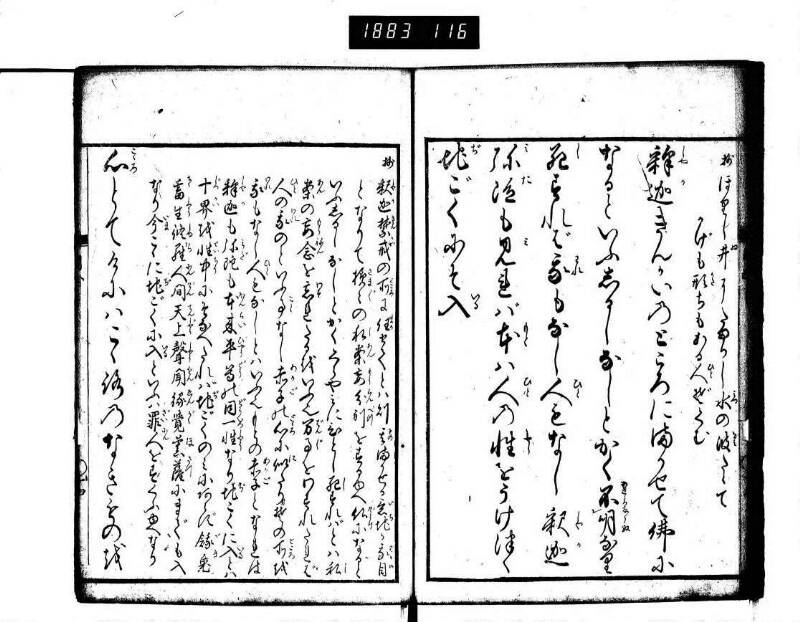
翻刻
抄
ほりし井(ゐ)にたまりし水(みづ)の波(なみ)たゝて
かげも形ちもある人(ひと)ぞくむ
釈迦(しやか)きんかいのところにまかせて仏に
なるといふしるしなしとかく《振り仮名:不_レ明|あきらかならぬ》なり
死(し)すれば我(われ)もなし人(ひと)もなし釈迦(しやか)
弥陀(みた)も見(み)れば本(もと)は人(ひと)の性(しやう)をうけつく
地(ぢ)ごくにそ入(いる)
抄
釈迦(しやか)禁戒(きんかい)の所(ところ)に任(まか)せてとは則 其(その)まかせる意地(いち)か我自(わかめ)
となりて様々(さま〴〵)の私案(しあん)妄分別(もうふんべつ)をするゆへ仏(ほとけ)になると
いふしるしなしとかくくらやみにひとし死(し)すればとは私(し)
案(あん)の妄念(もうねん)を忘(わす)れたるをいふ也 万事(ばんじ)をわすれたれば
人(ひと)の我(われ)のといふ事(こと)なし赤子(あかご)の心(こゝろ)に似(に)たりその所(ところ)を
我(われ)もなし人(ひと)もなしとはいふ也もとの赤子(あかご)となれは
釈迦(しやか)も弥陀(みだ)も本来(ほんらい)平等(びやうどう)の同一性(どういつしやう)なり地(ぢ)こくに入(いる)とは
十界(じつかい)を性中(せいちう)にそなへたれば地(ぢ)ごくのみにあらず餓鬼(がき)
畜生(ちくしやう)修羅(しゆら)人間(にんげん)天上(てんじやう)声聞(しやうもん)縁覚(ゑんがく)菩薩(ぼさつ)にまでも入
なり今(いま)こゝに地(ぢ)ごくに入(いる)といふは罪人(ざいにん)をすくふゆへなり
心(こゝろ)とてけにはこゝろのなきものを
現代語訳
抄
掘った井戸にたまった水が波立って
影も形もある人が汲んでいる
釈迦の禁戒のところに任せて仏に
なるという証しなし、とにかく明らかでない
死ねば我もなし人もなし、釈迦や
阿弥陀も見れば元は人の性を受け継いで
地獄にこそ入る
抄
釈迦の禁戒のところに任せてとは、すなわちその任せる心が我意となって、様々な私的な思案や妄想分別をするゆえに、仏になるという証しがない。とにかく暗闇に等しい。「死ねば」とは私的思案の妄念を忘れたことを言うのである。万事を忘れたれば、人だの我だのということがない。赤子の心に似ている。その所を「我もなし人もなし」と言うのである。元の赤子となれば、釈迦も阿弥陀も本来平等の同一性である。「地獄に入る」とは、十界を性の中に備えているから地獄のみではなく、餓鬼・畜生・修羅・人間・天上・声聞・縁覚・菩薩にまでも入るのである。今ここに「地獄に入る」と言うのは罪人を救うゆえである。
心といっても、毛にはその心のないものを
英語訳
Extract
In a dug well with accumulated water, waves arise,
A person with shadow and form draws water.
Entrusting to Shakyamuni's prohibitions to become
a Buddha—there is no sign of this, it is unclear in any case.
When dead, there is no self, no others; if you look at Shakyamuni and
Amida, originally they inherited human nature and
indeed enter hell.
Extract
"Entrusting to Shakyamuni's prohibitions" means that very act of entrusting becomes self-will, creating various private speculations and delusional discriminations, hence there is no sign of becoming a Buddha. In any case, it is like darkness. "When dead" refers to forgetting the delusional thoughts of private speculation. When all things are forgotten, there is no talk of "people" or "self." It resembles an infant's mind. That state is called "no self, no others." When one returns to being an original infant, Shakyamuni and Amida are fundamentally equal in their identical nature. "Entering hell" means that since the ten realms are inherently possessed within one's nature, one enters not only hell but also the realms of hungry ghosts, animals, asuras, humans, heaven, voice-hearers, private buddhas, and bodhisattvas. The reason it says "enters hell" here is because it is to save sinners.
Though called mind, in hair there is that which has no mind...