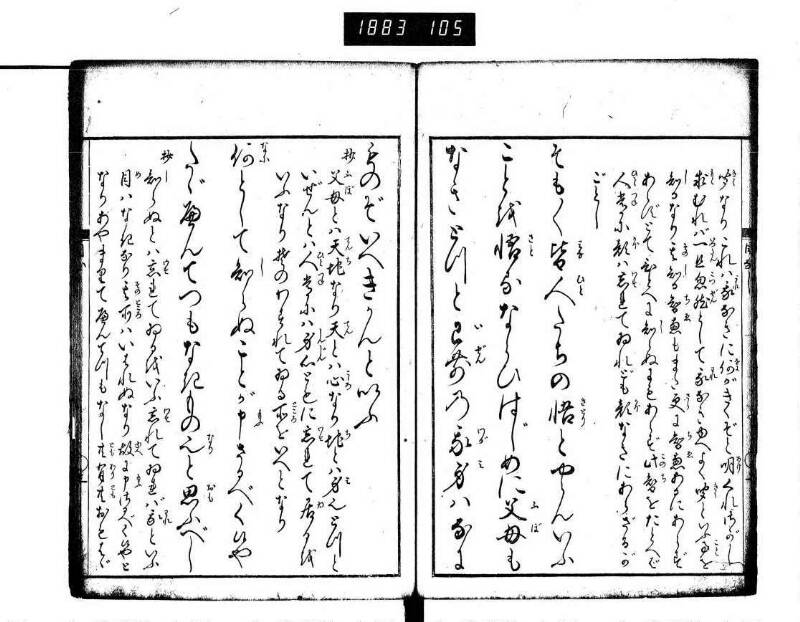
翻刻
聞(きく)なりこれは我(われ)なきに何(なに)がきくぞと明(あけ)くれさがし
求(もと)むれば一旦(いつたん)忽然(こつぜん)として我(われ)なきゆへよく聞(きく)といふ事(こと)を
知(し)るなり其(その)知(し)る智恵(ちゑ)もまた更(さら)に知恵(ちゑ)あるにあらず
あらずとてひとへに知(し)らぬにもあらず此(この)智(ち)をたとへば
人(ひと)常(つね)に顔(かほ)は忘(わすれ)れてゐれども顔(かほ)なきにあらざるが
ごとし
そも〳〵皆(みな)人(ひと)たちの悟(さとり)とやらんいふ
ことを悟(さと)るならひはじめに父母(ふぼ)も
なきとつと已前(いぜん)の我身(わがに)はなに
ものぞいへきかんといふ
抄
父母(ふぼ)とは天地(てんち)なり天(てん)とは心(こゝろ)なり地(ち)とは身(み)也とつと
いぜんとは人(ひと)常(つね)には身心(しんじん)ともに忘(わす)れて居(ゐ)るを
いふなりそのわすれてゐる所(ところ)をいへとなり
何(なに)として知(し)らぬことが申(もふ)さるべく候や
たゞへんてつもなきもの也(なり)と思(おも)ふべし
抄
知(し)らぬとは忘(わす)れてゐるをいふ忘(わす)れてゐれば我(われ)といふ
目(め)はなきなり其(その)所(ところ)はいはれぬなり故(ゆへ)に申(もふ)さるべく候やと
なりあやまりてへんてつもなし共(とも)有(あり)共(とも)おもはゞ
現代語訳
聞くのである。これは我がないのに何が聞くのかと、明け暮れ探し
求めれば、一旦忽然として我がないゆえによく聞くということを
知るのである。その知る智慧もまた更に智慧があるのではなく、
ないといって一向に知らないのでもない。この智を例えば
人が常に顔は忘れているけれども顔がないのではないのと
同じである。
そもそも皆人たちの悟りとやらいう
ことを悟る習わしは、はじめに父母も
ない、ずっと以前の我が身は何
ものぞ言ってみよ、と問うという
抄
父母とは天地なり。天とは心なり。地とは身である。ずっと
以前とは人が常には身心ともに忘れているを
言うのである。その忘れている所を言えとなり。
何として知らぬことが申されるべきでしょうか。
ただ変哲もないものであると思うべし。
抄
知らぬとは忘れているを言う。忘れていれば我という
目はないのである。その所は言われないのである。故に申されるべきでしょうかと
なり。誤って変哲もなしとも有りとも思えば
英語訳
hears. This is: when there is no self, what is it that hears? Searching day and night, seeking this, one suddenly realizes that precisely because there is no self, one hears well.
The wisdom that knows this is not wisdom that possesses further wisdom, yet it is not the case that one knows nothing at all. This wisdom can be compared to
how a person constantly forgets their face, yet it is not that they have no face.
Now, the practice of awakening to what people call enlightenment begins with asking: "Before father and mother existed, long before that, what was your original self? Speak!"
Extract
Father and mother refer to heaven and earth. Heaven is mind, earth is body. "Long before"
refers to how people ordinarily forget both body and mind.
It means to speak of that forgotten place.
How can one speak of what one does not know?
Simply think of it as something utterly ordinary.
Extract
"Not knowing" refers to forgetting. When forgotten, there is no eye of "self."
That place cannot be spoken of. Therefore, "how can one speak?"
If one mistakenly thinks it is either ordinary or extraordinary,