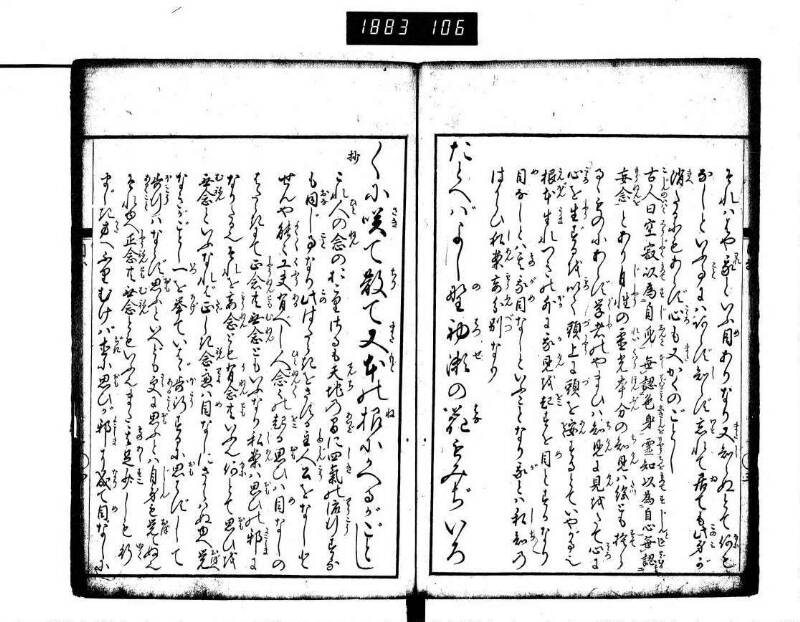
翻刻
それはや我(われ)といふ目(め)ありなり又(また)知(し)らぬとて何(なに)も
なしといふ事(こと)にはあらず知(し)らず忘(わす)れて居(ゐ)ても此(この)身(み)が
消(きへ)たるにもあらず心(こゝろ)も又(また)かくのごとし
古人(こじんの)曰(いはく)空(くう)寂(じやくを)以(もつて)為(す)_二自身(じしんと)_一無(なし)_レ認(とゞむること)_二色身(しきしん)_一霊(りやう)知(ちを)以(もつて)為(す)_二自心(じしんと)_一無(なし)_レ認(とゞむること)_二
妄念(もうねん)_一とあり自性(じしやう)の霊光(れいくはう)本分(ほんぶん)の知見(ちけん)は絶(たつ)とも捨(すて)ら
るゝものにあらず学者(がくしや)のやまひは知見(ちけん)に見(けん)をたて心(こゝろ)に
心(こゝろ)を生(しやう)ずるを以(もつ)て頭上(づしやう)に頭(づ)を《振り仮名:安|あん|をく》するとていやがる也
根本(こんぼん)生(うま)れつきの外(ほか)に家見(かけん)を起(をこ)すを目(め)とするなり
目(め)なしとは其(その)我目(がめ)なしといふことなり我(が)とは私知(しち)の
はからひ私案(しあん)妄分別(もうふんべつ)なり
たとへはよし野(の)初瀬(はつせ)の花(はな)もみぢいろ
〳〵に咲(さき)て散(ちり)て又(また)本(もと)の根(ね)にかへるがごとし
抄
これ人(ひと)の念(ねん)のおこりさるも天地(てんち)の間(あいだ)に四気(しき)の流行(りうこう)する
も同(おな)じ事(こと)なり此(この)はたらきをさする主人公(しゆじんこう)をなしと
せんや能々(よく〳〵)工夫(くふう)有(ある)べし人(ひと)念々(ねん〳〵)の起(をこ)る思(おも)ひは目(め)なしの
はたらきにて正念(しやうねん)共(とも)無念(むねん)ともいふなり私案(しあん)は思(おも)ひの邪(よこしま)に
なりたる也それを妄念(もうねん)ども有念(うねん)共(とも)いふ也何(なに)とて思(おも)ひを
無念(むねん))といふなれば正(たゞ)しき念慮(ねんりよ)は目(め)なしにさからはぬゆへ覚(おぼへ)
なきがごとし一(いつ)を挙(あげ)ていはゞ歩行(ほこう)するに思(おも)はずして
歩行(ほこう)はならず思(おも)ふといへども更(さら)に思(おも)ふとは自身(じしん)も覚(おぼ)えぬ也
それゆへ正念(しやうねん)共(とも)無念(むねん)ともいふ也また其(その)足(あし)少(すこ)しも行(ゆく)
まじき方(かた)へふりむけば直(ぢき)に思(おも)ひが邪(よこしま)に成(なり)て目(め)なしに
現代語訳
それは我という目があるのである。また知らぬといって何も
ないということではない。知らず忘れていても、この身が
消えたのでもなく、心もまた同様である。
古人が言うには「空寂を以て自身となし、色身に執着することなく、霊知を以て自心となし、妄念に執着することなし」とある。自性の霊光、本分の知見は、絶やすとも捨て去られるものではない。学者の病は、知見に見解を立て、心に心を生ずることを以て、頭上に頭を安置するとして嫌がるのである。
根本生まれつきの外に仮見を起こすを目とするのである。
目なしとは、その我目なしということである。我とは私知の
はからい、私案、妄分別である。
例えば吉野初瀬の花紅葉が、色
とりどりに咲いて散って、また元の根に帰るようなものである。
抄
これは人の念の起こり去るのも、天地の間に四気の流行するのも同じことである。この働きをさせる主人公をなしと
するであろうか。よくよく工夫があるべきである。人の念々の起こる思いは目なしの
働きにて、正念とも無念ともいうのである。私案は思いの邪
になったものである。それを妄念とも有念ともいうのである。なぜ思いを
無念というかといえば、正しき念慮は目なしに逆らわないゆえ、覚え
がないようなものである。一つを挙げていえば、歩行するのに思わずして
歩行はできず、思うといえども更に思うとは自身も覚えないのである。
それゆえ正念とも無念ともいうのである。またその足が少しでも行く
まじき方へ振り向ければ、直ちに思いが邪になって目なしに
英語訳
then there is an eye of "self." Also, "not knowing" does not mean that nothing exists. Even when not knowing and forgetting, this body has not disappeared, and the mind is the same way.
An ancient sage said: "Take emptiness and stillness as your true self, without attachment to the physical body; take spiritual knowing as your true mind, without attachment to deluded thoughts." The spiritual light of one's true nature and the knowledge of one's original portion cannot be severed or abandoned. The sickness of scholars is that they establish views upon knowledge and generate mind upon mind, which is despised as placing a head upon a head.
They make eyes out of creating false views beyond their fundamental, innate nature.
"No eyes" means having no self-eye. "Self" refers to the machinations of private knowledge, personal schemes, and deluded discrimination.
For example, it is like the cherry blossoms and autumn leaves of Yoshino and Hatsuse blooming and scattering in various colors, then returning to their original roots.
Extract
This is the same as thoughts arising and passing away in people, and the circulation of the four seasons between heaven and earth. Would one say there is no master who makes this functioning happen? One should investigate this thoroughly. The thoughts that arise moment by moment in people are the working of "no eyes," called both right mindfulness and no-mindfulness. Personal schemes are thoughts that have become crooked. These are also called deluded thoughts or existent thoughts. Why are thoughts called "no-mindfulness"? Because correct mental activity does not oppose "no eyes," so it seems as if there is no awareness of it. To give one example: when walking, one cannot walk without thinking, yet even though one thinks, one is not aware of thinking. Therefore it is called both right mindfulness and no-mindfulness. Also, if that foot turns even slightly toward a direction it should not go, immediately the thought becomes crooked and against "no eyes"