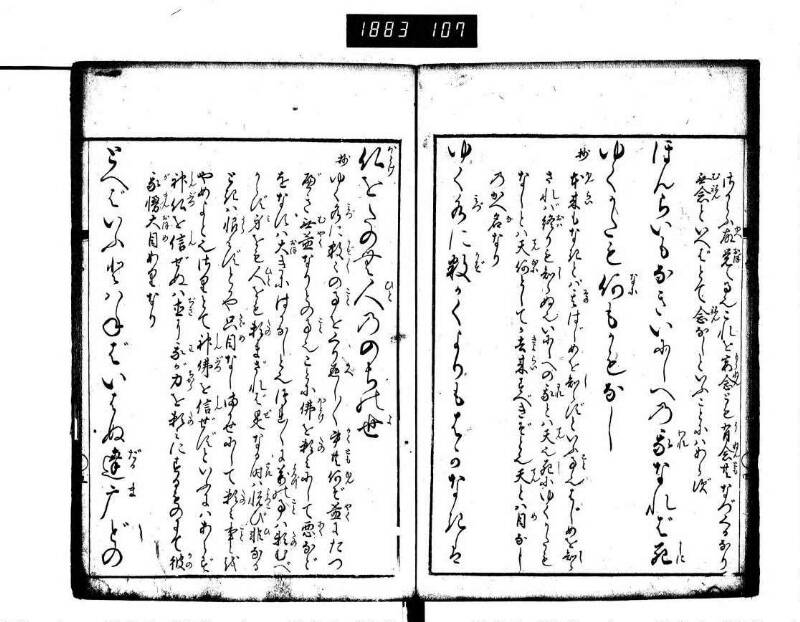
翻刻
さからふ故(ゆへ)覚(おぼ)える也これを妄念(もうねん)とも有念(うねん)共(とも)なづくるなり
無念(むねん)といへばとて念(ねん)なしといふことにはあらず
ほんらいもなきいにしへの我(われ)なれば死(しに)
ゆくかたも何(なに)もかもなし
抄
本来(ほんらい)もなきとは其(その)はじめを知(し)らずといふ事(こと)也はじめを知(し)ら
されば終(おは)りも知(し)らぬ也いにしへの我(われ)とは天(てん)也 死(し)にゆくかたも
なしとは天(てん)何(なに)としてか去来(きよらい)すべきぞと也 天(てん)とは目(め)なし
のかへ名(な)なり
ゆく水(みづ)に数(かず)かくよりもはかなきは
仏(ほとけ)をたのむ人(ひと)のちの世(よ)
抄
ゆく水(みづ)に数々(かず〳〵)の事をくり返(かへ)し〳〵書(かく)共(とも)何(なん)ぞ益(やく)にたつ
へき無益(むやく)なりとの事(こと)也ことに仏(ほとけ)を頼(たの)みにして悪(あく)など
をなすは大(おほ)きにはかなしと也つれ〳〵に万(よろづ)の事(こと)は頼(たの)むべ
からず身(み)をも人(ひと)をも頼(たの)まざれば是(ぜ)なる時(とき)は悦(よろこ)び非(ひ)なる
ときは恨(うら)みずとかや只目(たゞめ)なしまかせにして頼(たの)み事(ごと)を
やめよと也さりとて神仏(しんぶつ)を信(しん)ぜずといふにはあらず
神仏(しんぶつ)を信(しん)ぜぬは直(ぢき)に我(わ)が力(ちから)を頼(たの)みにするものにて彼(かの)
我慢(がまん)大目(おほめ)ありなり
とへばいふとはねばいはぬ達磨(だるま)どの
現代語訳
逆らうゆえに覚えるのである。これを妄念とも有念とも名づけるのである。
無念といっても念がないということではない。
本来もない昔の我であれば、死に
行く方も何もかもなし
抄
本来もないとは、その始めを知らないということである。始めを知ら
なければ終わりも知らないのである。昔の我とは天である。死に行く方も
ないとは、天がどうして去来するであろうかということである。天とは目なし
の別名である。
行く水に数書くよりもはかないのは
仏を頼む人の後の世
抄
行く水に数々のことを繰り返し書いても何の益になる
はずもなく無益であるということである。ことに仏を頼みにして悪など
をなすのは大いにはかないことである。つれづれに万の事は頼むべ
きではない。身をも人をも頼まなければ、是なる時は悦び、非なる
時は恨まないとかいう。ただ目なし任せにして頼み事を
やめよということである。さりとて神仏を信じないということではない。
神仏を信じないのは直ちに我が力を頼みにするもので、かの
我慢大目ありなのである。
問えば言う問わねば言わぬ達磨殿
英語訳
Because it opposes [no eyes], one becomes aware of it. This is what is called deluded thoughts or existent thoughts.
Even when called "no-mindfulness," it does not mean there are no thoughts.
Originally having no ancient self,
there is nothing at all in the direction of death
Extract
"Originally having no" means not knowing its beginning. If one does not know
the beginning, one also does not know the end. The "ancient self" refers to heaven. "Having no
direction of death" means how could heaven come and go? Heaven is
another name for "no eyes."
More fleeting than writing numbers on flowing water
is the afterlife of those who rely on Buddha
Extract
Even if one repeatedly writes various things on flowing water, what benefit could it
possibly bring—it is useless. Especially, relying on Buddha while committing evil
is greatly futile. Generally speaking, one should not rely on
myriad things. If one relies neither on oneself nor on others, when things are right one rejoices, when
wrong one does not resent, so they say. Simply entrust everything to "no eyes" and
stop relying on things. However, this does not mean not believing in gods and Buddhas.
Not believing in gods and Buddhas means directly relying on one's own power, which
shows great arrogance.
When asked he speaks, when not asked he doesn't speak—Master Daruma