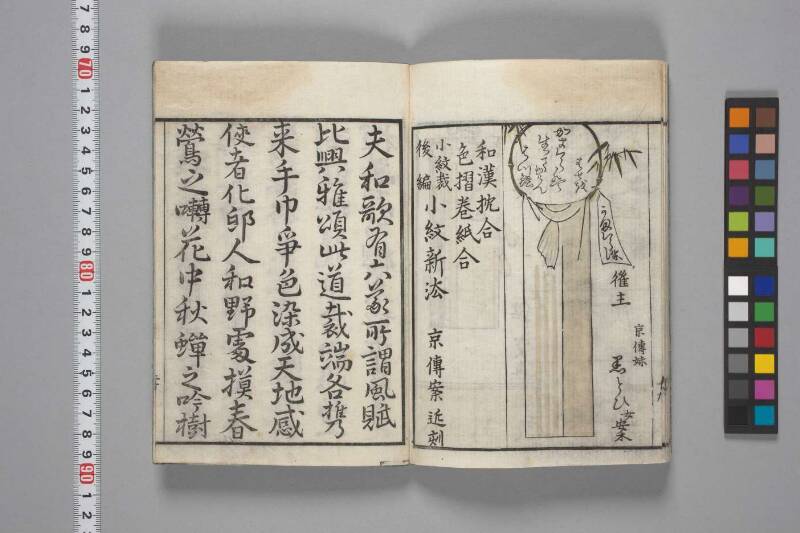
翻刻
催主 京伝妹 黒とひ女案
かまくら染
はせを
かまくらは
生て出けん
はつ鰹
【近刊】
和漢枕合
色摺巻紙合
《割書:小紋裁|後編》小紋新法 京伝案 近刻
夫和歌有六義所謂風賦
比興雅頌此道裁端各携
来手巾争色染成天地感
侠者化郎人和野処摸春
鶯之囀花中秋蝉之吟樹
現代語訳
催主 京伝妹 黒とび女案
鎌倉染
芭蕉
鎌倉は
生きて出でけん
初鰹
【近刊】
和漢枕合
色摺巻紙合
《割書:小紋裁|後編》小紋新法 京伝案 近刻
それ和歌には六義あり、いわゆる風・賦・
比・興・雅・頌である。この道の裁端は各々携
え来る手拭いの色を争い、染め成すことで天地が感
動し、侠客も若者も和やかな野辺で春の
鶯の囀りや花中の秋蝉の吟を模倣する
英語訳
Organizer: Kyōden's younger sister, design by Kurotobime
Kamakura dye
Bashō
In Kamakura
They must emerge alive -
The first bonito
【Recent Publications】
Matching of Japanese and Chinese Pillows
Color-printed rolled paper matching
《Side note: Small pattern cutting | Second volume》New methods for small patterns, Kyōden's design, soon to be published
Now, waka poetry has six principles, namely fū, fu,
hi, kyō, ga, and shō. The essence of this way is that each person carries
their own hand towels, competing in colors, and through dyeing them, heaven and earth are moved
to emotion, and both gallant men and young people in peaceful fields imitate
the warbling of spring nightingales and the singing of autumn cicadas among flowers