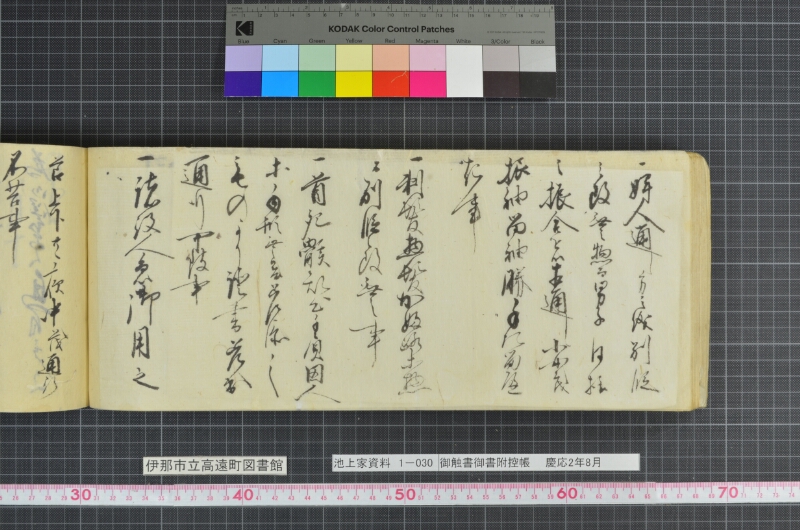
翻刻
【右丁】
一■人通し方之儀別段
御改有之惣而男子 同様
之振食を以相通り小女も
振袖留袖勝手江留屋
■事
一剃髪惣髪かふ路等惣
而別段候改無之事
一首死骸乱心手負囚人
等ノ手形無之御差添候
ものより読書差出
通行可致事
一諸役人着御用之
現代語訳
一、人の通行方法については特別な改めがあり、総じて男子と同様の振る舞いをもって通行すること。小女(若い女性)も振袖・留袖の別なく自由に通行してよい。
[ただし、特定の場所への留まることは制限される。]
一、剃髪(ていはつ)・総髪(そうがみ)・被り物(かぶりもの)等については、総じて特別な改め(検査)は行わない。
一、首(くび)・死骸・乱心者(らんしんもの)・手負い(負傷者)・囚人等、手形(通行手形)を持たない者に付き添う者は、読み書き(書付)を差し出した上で通行すること。
一、諸役人が着御用(急ぎの御用)の場合は、(以下、次ページへ続く)
英語訳
One: Regarding the passage of persons, special inspections shall be conducted; in general, persons shall pass in the same manner as males. Young women (ko-onna) may also pass freely regardless of whether they wear furisode (long-sleeved kimono) or tomesode (short-sleeved kimono).
[However, lingering in certain areas is restricted.]
One: Regarding hair styles such as teihatsu (shaved head), sōgami (loose/unbound hair), or head coverings (kaburimono), no special inspection shall be conducted in general.
One: Regarding severed heads, corpses, persons who have lost their senses (ranshin-mono), wounded persons, prisoners, and others — those accompanying any such persons who do not possess a passage permit (tegata) must submit a written statement before being permitted to pass.
One: In cases where various officials are on urgent business — (continues on the following page)