翻刻
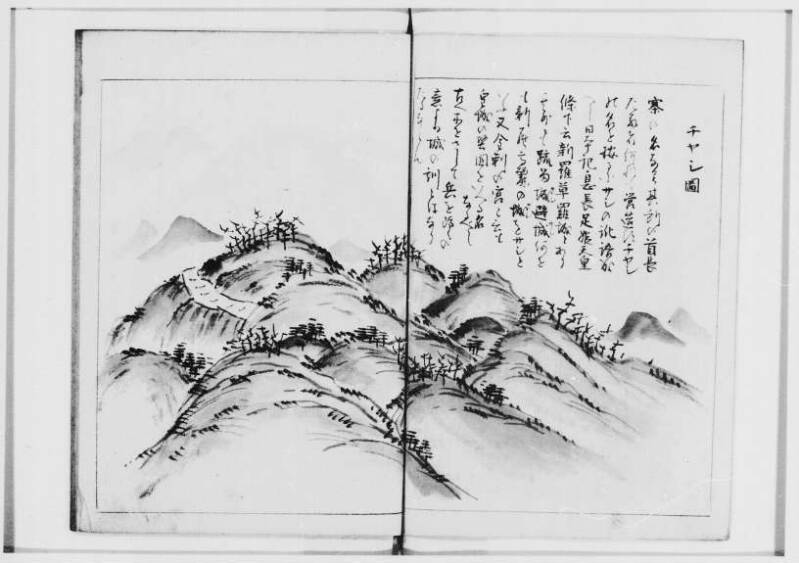
チヤシ図
塞の名なるか其所の首長
たる者何れも営造すチヤシ
の名を按るにサシの訛語成
へし日本記息長足姫天皇
条下云新羅草羅城とあり
其外にも疏留 城(サシ)避 城(サシ)何を
も新羅守麗の城(サシ)をサシと
いふ又金刺の宮と云も
皇城の堅固をいへる名
なるべし
古へ木をさして兵を防くの
意より城の訓とはなり
たるならん
現代語訳
**チャシの図について**
「チャシ」とは砦(とりで)の名称である。その地の首長たる者は、いずれもこれを築造する。「チャシ」という名称を考察するに、「サシ」の訛った語であろう。『日本書紀』息長足姫天皇(神功皇后)の条に「新羅の草羅城」とあり、その他にも「疏留城(サシ)」「避城(サシ)」など、新羅・高麗の城(とりで)をいずれも「サシ」と呼んでいる。また「金刺の宮」という言葉も、皇城の堅固さを表す名称であろう。
古くは木を差し立てて兵を防ぐという意味から、「城」の訓読みが生まれたのであろう。
英語訳
**Illustration of Chashi**
"Chashi" is the name for a fortification. The chieftains of each locality all construct these. Upon examining the etymology of the name "Chashi," it would appear to be a corrupted form of "Sashi." In the *Nihon Shoki* (Chronicles of Japan), under the section on Empress Okinaga-tarashi-hime (Empress Jingū), it is written "the Sōra fortress of Silla (Shiragi)." Furthermore, in other passages, fortresses such as "Soryu-jō (Sashi)" and "Hi-jō (Sashi)" — all fortifications of Silla and Koma (Goryeo) — are referred to as "Sashi." Additionally, the term "Kanasashi-no-miya" (Palace of Kanasashi) would appear to be a name expressing the solidity and strength of an imperial palace.
In ancient times, the reading of "shiro" (castle/fortress) as a Japanese word likely derived from the meaning of planting wooden stakes to repel soldiers.