翻刻
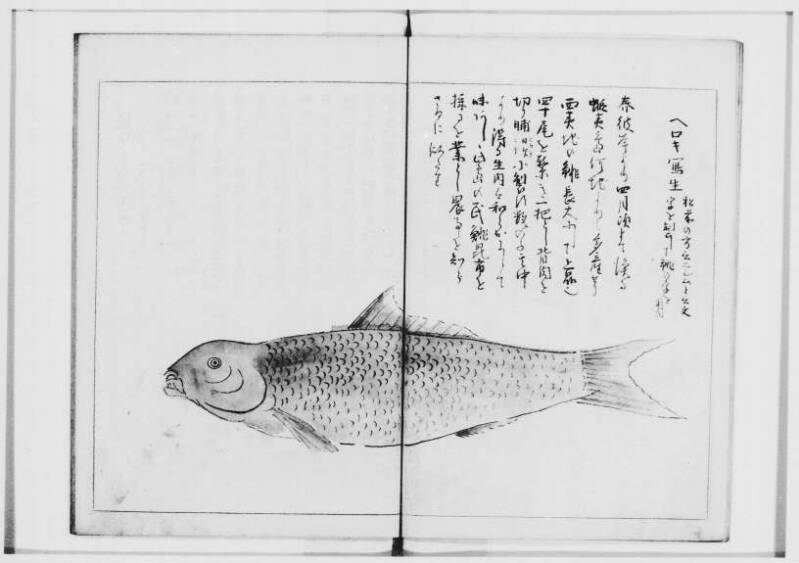
ヘロキ写生《割書:松前の方言ニシムと言文|字を製して鯡の字を用ゆ》
春彼岸より四月頃まて漁る
蝦夷島何地よりも多産せり
西夷地の鯡長大にして上品也
四十尾を繋き一把とし背肉を
切り脯《割書:日欠(ヒカケ)|ニテ》に製す数の子其中
より得る生肉は和らかにして
味あしゝ此島の民鯡昆布を
採るを業とし農事を知ら
さるに似たり
現代語訳
**ヘロキ(鰊)写生**
(割書:松前の方言では「ニシム」と言い、文字を作って「鯡」の字を用いる)
春の彼岸から四月頃まで漁獲される。
蝦夷島のどの地域よりも多く産出される。
西夷地の鰊は大きく長くて上質である。
四十尾を束ねて一把とし、背の肉を
切り、日干しの干物に加工する。数の子はその中から
得られる。生の肉は柔らかく、
味はよくない。この島の民は、鰊と昆布を
採ることを生業とし、農業を
知らないようである。
英語訳
**Herring (Heroki) Sketch**
(Interlinear note: In the dialect of Matsumae, it is called "Nishimu," and a character was devised, using the character "鯡" [herring].)
Herring are caught from the spring equinox until around the fourth month.
They are most abundantly produced throughout the island of Ezo.
The herring from the western Ezo territories are large and of superior quality.
Forty fish are bundled together to make one bundle, and the back meat is
cut and dried in the sun to make dried fish. The herring roe (kazunoko) is
obtained from within them. The raw flesh is tender but
does not taste good. The people of this island make their living
by harvesting herring and kelp, and appear to have
no knowledge of farming.