翻刻
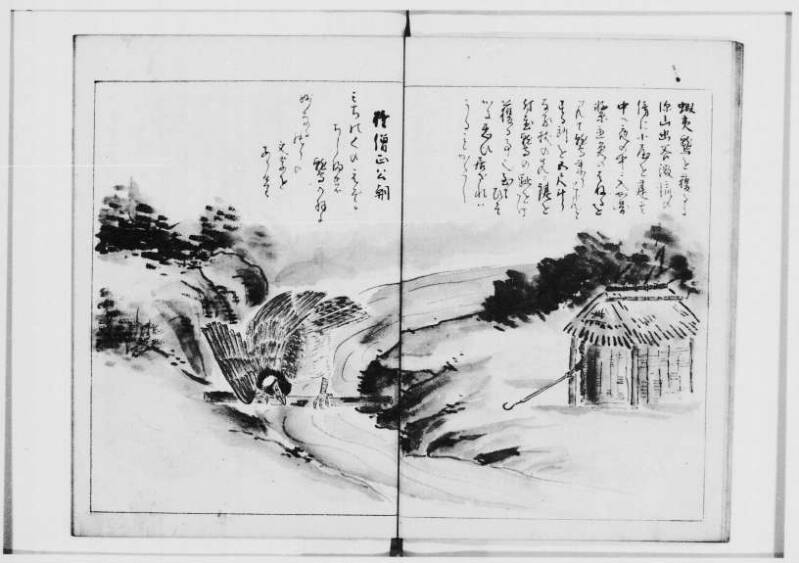
蝦夷鷲を獲るに
深山幽谷激流の
傍に小屋を建て【其ヵ】
中へ夜の中に入如図
繋置魚のはねるを
見て鷲来りとらんと
する所を五尺計り
なる杖の先に鍵を
付置鷲の趾をかけ
獲る事也至てひそ
かに忍ひ居ざれは
うることかたし
権僧正公朝
みちのくのえぞか
ちしまの
鷲の羽に
妙なるのりの
文字も
ありけり
現代語訳
蝦夷の鷲の捕り方について。
深山幽谷の激流のほとりに小屋を建て、その中へ夜のうちに入り、図のように魚を繋いで置く。魚が跳ねるのを見て鷲が来て掴もうとするところを、五尺(約150cm)ほどの棒の先に鉤をつけたもので、鷲の足をひっかけて捕らえるのである。極めて静かに潜んでいなければ、捕ることは難しい。
権僧正公朝の歌
みちのくのえぞが ちしまの
鷲の羽に
妙なるのりの
文字も ありけり
英語訳
On the Ainu method of catching eagles.
A small hut is built beside the rushing waters of a deep mountain valley. Under cover of night, one enters the hut and places a fish tied up inside, as shown in the illustration. When the eagle comes to seize the leaping fish, one uses a hooked pole of approximately five shaku (about 150 cm) in length to catch the eagle by its talons and capture it. Unless one conceals oneself in complete silence, it is very difficult to make the catch.
A waka poem by Gon-no-Sōjō Kōchō:
*Michinoku no / ezo ga Chishima no / washi no hane ni / myō naru nori no / moji mo arikeri*
"Even on the feathers of the eagles of the islands of Ezo in Michinoku, the wondrous characters of the Buddhist Law are to be found."