翻刻
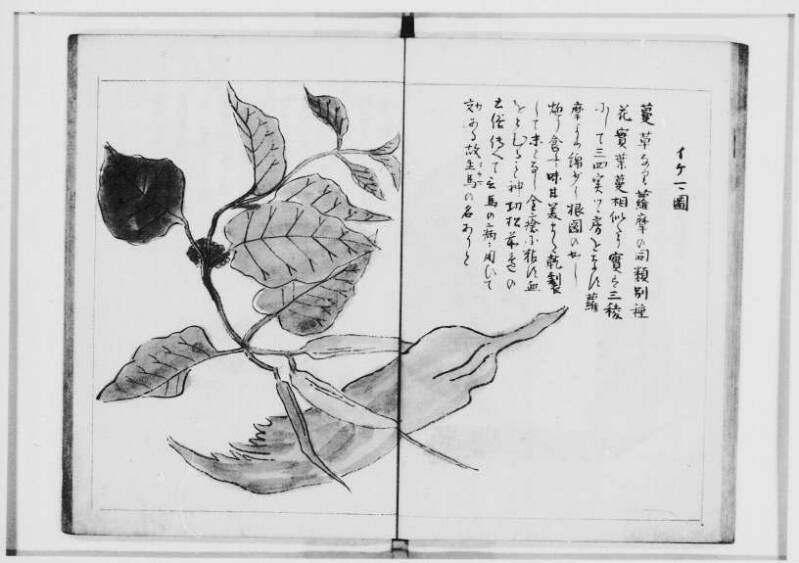
イケマ図
蔓草なり蘿摩#1の同類別種
花実葉蔓相似たり実は三稜
にして三四実ツヽ房をなす蘿
摩より綿少し根図の如し
炮り食ふに味甘美また乾製
して末となし金瘡#2に粘す血
をとむること神功松前辺の
土俗伝へて言馬の病に用ひて
効ある故 生馬(イケマ)の名ありと
現代語訳
**イケマの図**
蔓草(つるくさ)の一種である。蘿摩(ガガイモ)と同類の別種であり、花・実・葉・蔓の形がよく似ている。実は三稜(さんりょう)形で、三〜四個ずつ房をなす。蘿摩よりも綿毛が少ない。根は図のとおりである。
炒って食べると味は甘く美味しい。また、乾燥させて粉末にし、刀傷(金瘡)に貼り付けると、血を止める効果が著しく優れている。松前あたりの土地の人々に伝わる話によれば、馬の病気に用いて効果があることから、「生馬(イケマ)」という名がついたとのことである。
英語訳
**Figure of Ikema**
This is a climbing vine plant. It belongs to the same family as *ramo* (gagaimo, *Metaplexis japonica*, a type of swallowwort), though it is a distinct species; the flowers, fruit, leaves, and vines closely resemble those of *ramo*. The fruit is three-ridged in shape and forms clusters of three to four fruits. It has less silky floss than *ramo*. The root is as depicted in the illustration.
When roasted and eaten, it has a sweet and delicious flavor. When dried and ground into powder and applied to sword wounds (金瘡, *kinsō*), it has a remarkably effective ability to stop bleeding. According to local tradition passed down in the Matsumae region, the plant has been used effectively for treating horses' ailments, and it is said that this is the origin of its name, "Ikema" (生馬, literally "living horse").