翻刻
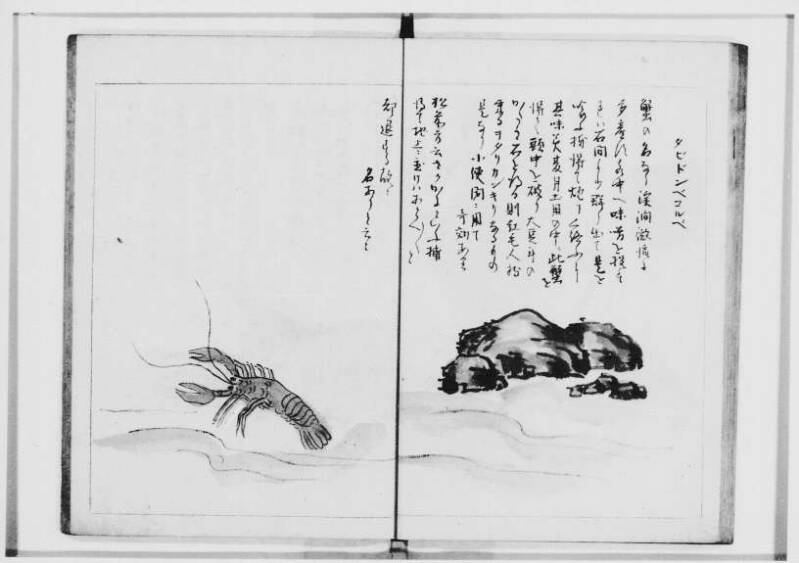
タビドンベコルベ
蟹の名なり渓澗微流に
多産す水中へ味噌を投す
れは石間より群し出て是を
喰ふ捕得て炮りくろふに
其味美夏月土用の中に此蟹を
得て頭中を破り大豆計りの
かたき石を得る即紅毛人持
来るヲタリカンキリなるもの
是なり小便閉に用て
奇効あり
松前方言さりかにといふ捕
得て地上に置けはあとへ〳〵と
却退する故に
名ありと云々
現代語訳
**タビドンベコルベ**
これは蟹の名前である。渓流や細い流れの中に多く生息する。水中に味噌を投げ入れると、石の間から群れをなして出てきて、これを食べる。捕まえて炒って食べると、その味は美味しい。夏の土用の時期にこの蟹を捕まえ、頭部を割ると、大豆ほどの大きさの硬い石(結石)を取り出すことができる。これはすなわち、オランダ人が持ってきた「ヲタリカンキリ」というものと同じものである。尿閉(小便が出なくなる症状)に用いると、著しい効果がある。
松前地方の方言では「さりかに」という。捕まえて地上に置くと、後ろへ後ろへと退いていくことから、この名前がついたと言われている。
英語訳
**Tabidombecorbe**
This is the name of a crab. It is found in abundance in mountain streams and small flowing waters. When miso is thrown into the water, the crabs come swarming out from between the rocks to eat it. When caught and roasted, the meat is delicious. During the midsummer *doyo* period, if one catches this crab and breaks open its head, a hard stone about the size of a soybean can be obtained. This is none other than the same thing as what the Dutch brought over, called "*Otarikankyri*" (likely a reference to crab gastroliths sold as medicinal stones). It is remarkably effective for treating urinary retention.
In the local dialect of Matsumae, this crab is called "*sari-kani*" (literally "retreating crab"). It is said that this name comes from the fact that when caught and placed on the ground, it moves backward, retreating step by step.