翻刻
日本記曰垂仁帝二十八年冬十月丙寅朔庚午天皇母弟倭彦命
薨十一月丙申朔丁酉葬倭彦命于身狹桃花鳥坂於是集近
習者悉生而埋立於陵城數日不死昼夜泣吟遂死而爛臰之犬
烏聚噉焉天皇聞此泣吟之聲心有悲傷詔羣卿曰夫以生所愛令
殉已者是甚傷矣其雖古風之非良何從自今以後議之止殉
同卅二年秋七月甲戌朔己卯皇后日葉酢媛命《割書:一曰日葉|酢根尊》薨臨葬
有日焉天皇詔群卿曰従死之道前知不可命此行之葬奈之為何
於是野見宿祢進曰夫君王陵墓埋立生人是不■#1也豈得傳
後葉乎願今将議使事而奏之則使者喚上出雲国之土部壹伯#2
人自領土部等取埴以造作人馬及種種物形献于天皇曰自今
以後以是土物交易生人樹於陵墓為後葉之法則天皇於是大
喜之詔野見宿祢曰汝之使議寔洽朕心則其土物始立于日葉酢
媛命之墓仍号是土物語垣輪亦名立物也仍下令曰自今以後
陵墓必樹是土物無傷人焉天皇厚賞野見宿祢之功亦賜鍜
地即任土部職因改本性#3謂土部連等之始祖也
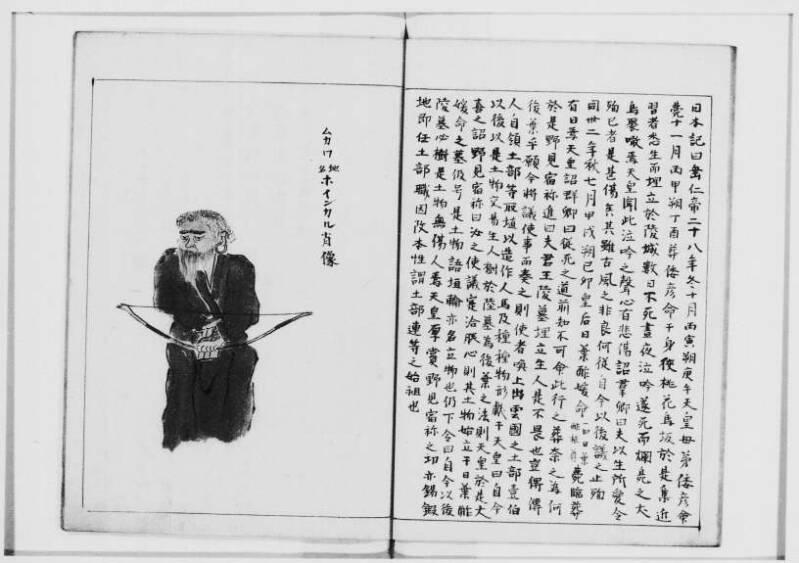
ムカワ《割書:地|名》ホインカル肖像
現代語訳
**[『日本書紀』の引用:殉死の禁止と埴輪の起源]**
『日本書紀』に曰く——垂仁天皇二十八年冬十月、丙寅を朔とする月の庚午の日、天皇の母弟・倭彦命が薨去された。十一月、丙申を朔とする月の丁酉の日、倭彦命を身狭桃花鳥坂に葬った。この時、近習の者たちを集め、ことごとく生きたまま陵の周囲に埋め立てた。数日が経っても死なず、昼夜を問わず泣き吟んだ。やがて死んで腐り臭くなると、犬や烏が集まってこれを食らった。天皇はこの泣き吟む声を聞き、心に悲しみを感じ、群卿に詔して仰せられた。「そもそも、生きている愛する者に殉死させることは、甚だ痛ましいことである。これは古くからの風習ではあるが、良いものではない。今後はいかにすべきか、議論してこれを止めるよう取り計らえ」と。
同三十二年秋七月、甲戌を朔とする月の己卯の日、皇后・日葉酢媛命(一説に日葉酢根尊とも)が薨去された。葬儀の日が近づくと、天皇は群卿に詔して仰せられた。「殉死の道は、かつて良くないと知りながら命じてしまったが、今度の葬儀はいかにすべきか」と。この時、野見宿祢が進み出て申し上げた。「そもそも君王の陵墓に生きた人を埋め立てることは、良いことではございません。どうして後世に伝えることができましょうか。今、臣が謀って事を行い、奏上いたしたく存じます」と。そこで使者を遣わして出雲国の土部(はじべ)百人を召し上らせ、自ら土部らを率いて土(埴)を取り、人・馬およびさまざまな物の形を作り、天皇に献上して申し上げた。「今後はこの土の物をもって生きた人に代え、陵墓に立てることを後世の法則とされますよう」と。天皇は大いに喜ばれ、野見宿祢に詔して仰せられた。「汝の謀り事は、まことに朕の心に叶うものである」と。そしてその土の物を、まず日葉酢媛命の墓に立て、「この土の物を埴輪(はにわ)と名づける。また立物(たてもの)とも呼ぶ」と仰せられた。さらに令を下して「今後は陵墓に必ずこの土の物を立て、人を傷つけることのないようにせよ」と命じられた。天皇は野見宿祢の功績を厚く賞し、鍜(かぬち、鍛冶)の地をも賜い、土部職に任じた。これにより本姓を改めて、土部連(はじべのむらじ)らの始祖と称されるようになった。
ムカワ(地名)ホインカル 肖像
英語訳
**[Quotation from the *Nihon Shoki*: The Prohibition of Burial Sacrifice and the Origin of Haniwa]**
The *Nihon Shoki* states: In the twenty-eighth year of Emperor Suinin's reign, in the winter, on the day of Kōgo in the tenth month (which began on Hinoe-Tora), the Emperor's younger brother on his mother's side, Prince Yamato-hiko, passed away. In the eleventh month, on the day of Hinoto-Tori (which began on Hinoe-Saru), Prince Yamato-hiko was buried at Musashi no Tsukisaka. On this occasion, those who had served in close attendance to the prince were gathered together, and all were buried alive around the funeral mound. They did not die for several days, and day and night they wept and groaned. When they finally perished and began to rot and putrefy, dogs and crows gathered to feed upon them. The Emperor, hearing the sound of their weeping and groaning, felt grief in his heart, and issued a decree to his assembled ministers: "To force those whom one loves in life to follow in death — this is a most grievous thing. Though it be an ancient custom, it is by no means a good one. From this time forward, let this matter be deliberated upon and the practice of burial sacrifice brought to an end."
In the same thirty-second year, in the autumn, on the day of Tsuchinoto-U in the seventh month (which began on Kinoe-Inu), the Empress Hibasu-hime no Mikoto (also called Hibasu-ne no Mikoto in one account) passed away. As the day of the burial approached, the Emperor issued a decree to his assembled ministers: "The way of burial sacrifice — I previously commanded it knowing full well it was wrong. What shall we do for this funeral?" At this point, Nomi no Sukune stepped forward and said: "To bury living people in the funeral mound of a royal lord is truly not a good thing. How can it be handed down to posterity? I beg leave to deliberate upon this matter and submit a proposal." He then sent messengers to summon one hundred Haji-be (clay workers) from the province of Izumo, and personally led the Haji-be in taking clay to fashion figures of people, horses, and various other objects, which he then presented to the Emperor, saying: "From this day forward, let these clay objects be substituted for living people, and let them be set up at funeral mounds as the law for future generations." The Emperor was greatly pleased and decreed to Nomi no Sukune: "Your proposal truly accords with Our heart." The clay objects were first erected at the tomb of Empress Hibasu-hime no Mikoto, and the Emperor declared: "Let these clay objects henceforth be called *haniwa* (埴輪; clay rings/cylinders). They are also called *tatemono* (立物; standing objects)." He further issued an order: "Henceforth, these clay objects shall always be erected at funeral mounds, and people shall not be harmed." The Emperor rewarded Nomi no Sukune handsomely for his achievement, and also granted him lands for ironworking/smithing, appointing him to the office of Haji-be. Thus his original family name was changed, and he is regarded as the founding ancestor of the Haji-be no Muraji clan.
*[Illustration caption:] Portrait of a person from Hoinkaru, Mukawa (place name)*